Or: Your Next Big Jump in Performance (and it costs a LOT less than a new wing)!
Note: I am a paraglider pilot and have only done two tandem hang gliding flights. It is possible that some different options might be feasible for hang glider pilots – feel free to share your insight or write a follow-up article!
First, what is micturition? It’s just the medical term for peeing. But it sounds so much fancier!
Second, why is hydration part of this article? Because peeing and hydration are closely intertwined, and for many pilots their “solution” to inflight micturition is to simply avoid it by drinking less. Which almost always means they are flying dehydrated – which is Not Good.
New pilots often ask about options for peeing while flying. I’ll explore various options that work for women, men (as far as I understand), and both. But first I want you to understand just how important this topic is: if you are not flying with some sort of in-flight pee system you are likely putting yourself at risk even without realizing it! We manage enough risk in free flight without adding to it unnecessarily.
How often have you heard another pilot say:
What’s the big deal about getting a little dehydrated? I’ll just drink some water after I land. [You’re still flying dehydrated!]
My flight isn’t going to be that long (how long is too long? how hot is it? how hydrated did you get yesterday? last night? this morning? before launching?) [You’re still flying dehydrated!]
The bottom line: to fly well (and safely!) you have to stay hydrated. And if you are well-hydrated throughout your flight you will almost certainly have to pee up there.
There are basic biological imperatives to drink fluids: help deliver nutrients to cells, support heart health and function, keep joints lubricated, prevent infections, improve sleep, aid digestion, and more. There are even studies showing that chronic dehydration may make you more susceptible to chronic illness later in life – an important consideration if you’re always flying dehydrated.
Most important in the context of free-flight, though, hydration helps:
regulate your temperature (keeping you warmer in cold conditions and cooler when it’s hot!)
keep your organs functioning properly (including your brain!)
improve cognition, memory, and mood – all of which are extremely important when operating any aircraft.
To fly your best you want your brain to be clear and fully functioning (and definitely no headache!), no unnecessary stress (gotta love those low cortisol levels), to feel relaxed (low heart rate, good mood, no anxiety), and healthy muscles (no cramping or tiredness). All of these rely on proper hydration!
Dehydration of your brain (which is 73% water) can negatively affect reaction time, concentration, and memory; personally, I really like having all of these things while flying. Improved cognition from proper hydration means you are thinking more clearly and making better decisions, both of which will improve your flying – helping you fly further, manage risk better, and land more safely. Who wouldn’t want that?!
[Sidebar: I started drafting this article at a competition in Colombia. On the very first day two pilots had bad landings: both were attributed, in large part, to dehydration!]
How do we – as pilots – get dehydrated?
Your body doesn’t just lose water when peeing, you also lose it when sweating and even just breathing. You want to replace that fluid when you’re flying, especially if it’s a long flight or you’re under any sort of stress. Do you ever get dry mouth when flying? That’s your body’s reaction to stress, and a great reminder to drink some water!
And hydration doesn’t start once you take off, or even while on launch: you should start your hydration routine at least the night before your flight! At dinner, alternate alcoholic drinks with glasses of water. Be sure to drink some more water before bed. In the morning, have some water with your breakfast, and bring water to drink while waiting on launch.
Why should we drink while flying?
Beyond replacing fluid, even just the act of taking a drink of water can trigger your parasympathetic nervous system, which helps you relax and prepare to deal with stress more effectively. And don’t wait until you’re getting a headache, or even until you’re thirsty; those both mean you’re already dehydrated! A great rule of thumb is to take a drink of water for every thermal you climb: you’ll build a good habit and regularly give your parasympathetic nervous system a little boost to prepare you for whatever is next.
Also, don’t forget that your body doesn’t just need pure H2O – it wants minerals and salts. That’s why there are so many electrolyte products out there for us to make hydration-water. Some are liquids, some are powders or drops to add to your water, some have sugar, some are flavored: pick the one that you will actually use! I like to drink some hydration-water in the morning when I get up, and bring more to drink on launch before flying. Some people load up their in-flight drinking water bladder with hydration-water, but watch out for products with sugar: you need to do extra thorough cleaning of the bladder afterward (the sugar feeds microbial growth faster than plain water).
Between search engines and AI queries it’s easy to find a lot of information out there about the importance of hydration. Here are a couple of quick reads:
OK, I’m staying hydrated so I fly better – now what?
We’ve seen how important hydration is and why you should be getting hydrated all through your flight: to get that performance boost! While you will breathe, sweat, and absorb some of that hydration you bring on-board during your flight, you will likely find that you have excess waste-water to deal with. So you need a way to pee while flying (also known as “in-flight micturition”).
Be prepared for obstacles: peeing while flying? What could possibly go wrong?! And regardless of the method you use, there are tricks to actually convincing your body to pee while fully clothed and in the middle of an epic flight.
If you have a built-in external tube, some basic information you should find useful is included below; for more you’ll need to find some experts on the topic. If you don’t have a built-in external tube, or you want to understand one of the biggest challenges female pilots face, read through to the end!
Still not convinced you need a method for peeing in-flight? For me, it was while flying in a cross country competition, after setting up to land just short of goal due to an overwhelming need to pee. I was determined to find the best possible solution to avoid being in that situation ever again. [I actually got super-lucky: the goal cylinder extended across the road, power lines, and trees and slightly into the center of the field I was landing in: I floated just long of my target and the “happy goal sound” played literally as I touched down! I went on to take first place for women in the event.] I have other friends who have just “let it rip” in their harnesses. (Something to consider when buying a used harness ;-)
All joking aside: consider whether you are losing that performance edge you get from being properly hydrated while flying, and – more importantly – the possible increased risk you expose yourself to flying dehydrated!
How do I get rid of the excess liquid I’m now drinking while flying?
Free flight pilots aren’t alone in this quest for a perfect in-flight micturition solution. Pilots in enclosed vehicles have more options, but even the US Navy recognized the need for a specialized solution for female pilots (unfortunately it’s heavy, expensive, and built-in to their seats so isn’t feasible for free-flight pilots).
There are many, many options out there, and I have tried most of them (for those without built-in external tubes). Are some of them scary? Yes. Do they all work? Definitely not. But hopefully this stroll down memory lane will provide some insight for you. Meanwhile, I’m still looking for a better solution; new materials for 3d printing might yield some interesting results!
tldr;
1 – If you have a built-in external tube, the general consensus is to use a condom catheter.
2 – If you do not have a built-in external tube, most XC/comp pilots consider the best option to currently be the She-P (which basically is a glue-on external tube).
3 – If you don’t like either 1 or 2 above, then diapers are likely your best bet.
If you want to know more, or how these options stack up, read on!
As mentioned elsewhere, I have tried a LOT of different options for peeing in-flight. I wrote this series of posts to collect what I’ve learned in one place and hopefully save other pilots some time, money, and discomfort figuring it out on their own.
The main focus is on options for women (since I’m a woman :-), but diapers (and their associated off-shoots) also work for men. The options specifically for men will get their own post!
If you know of other options, please share what you know!
Disposable Diapers
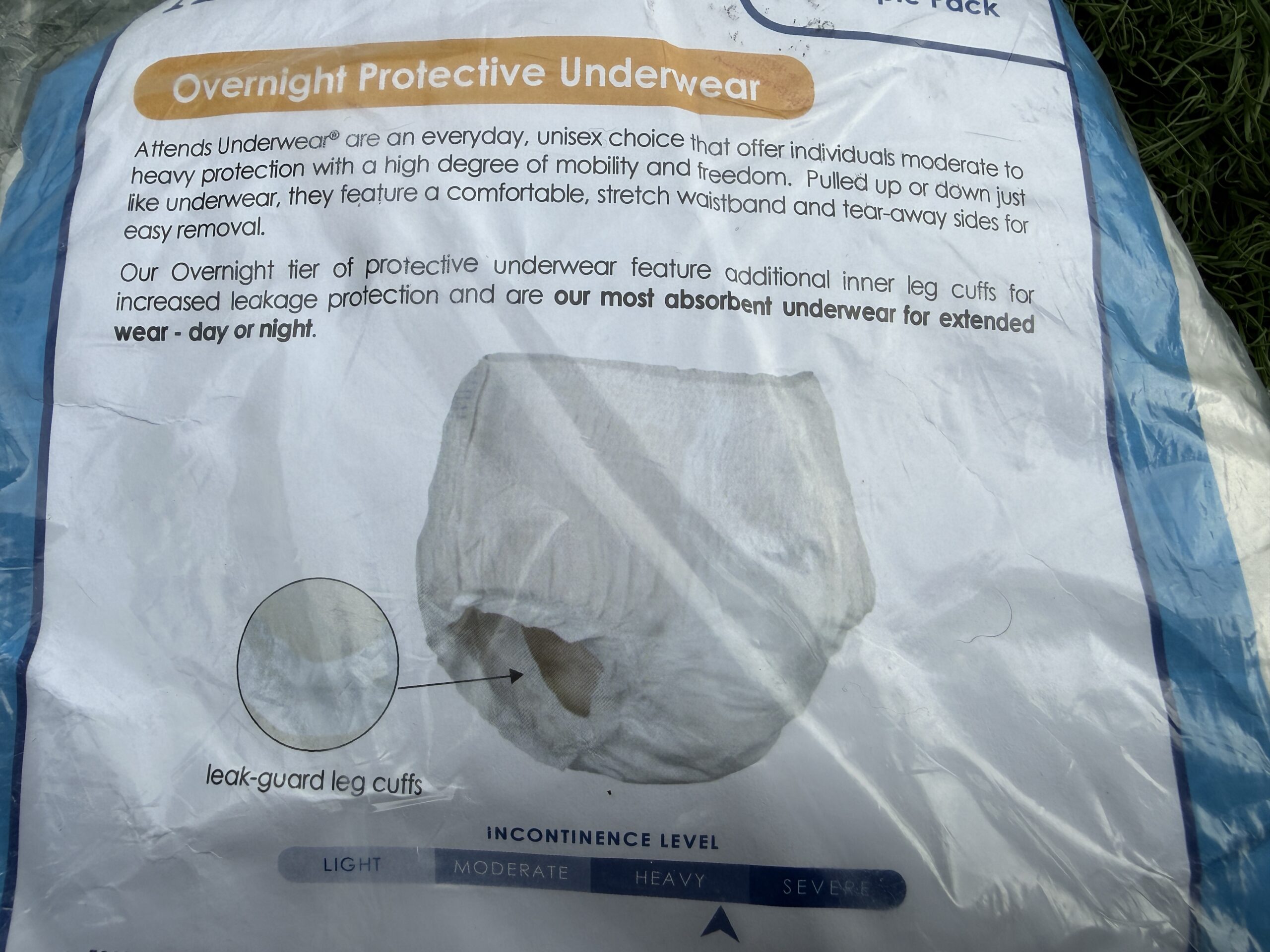
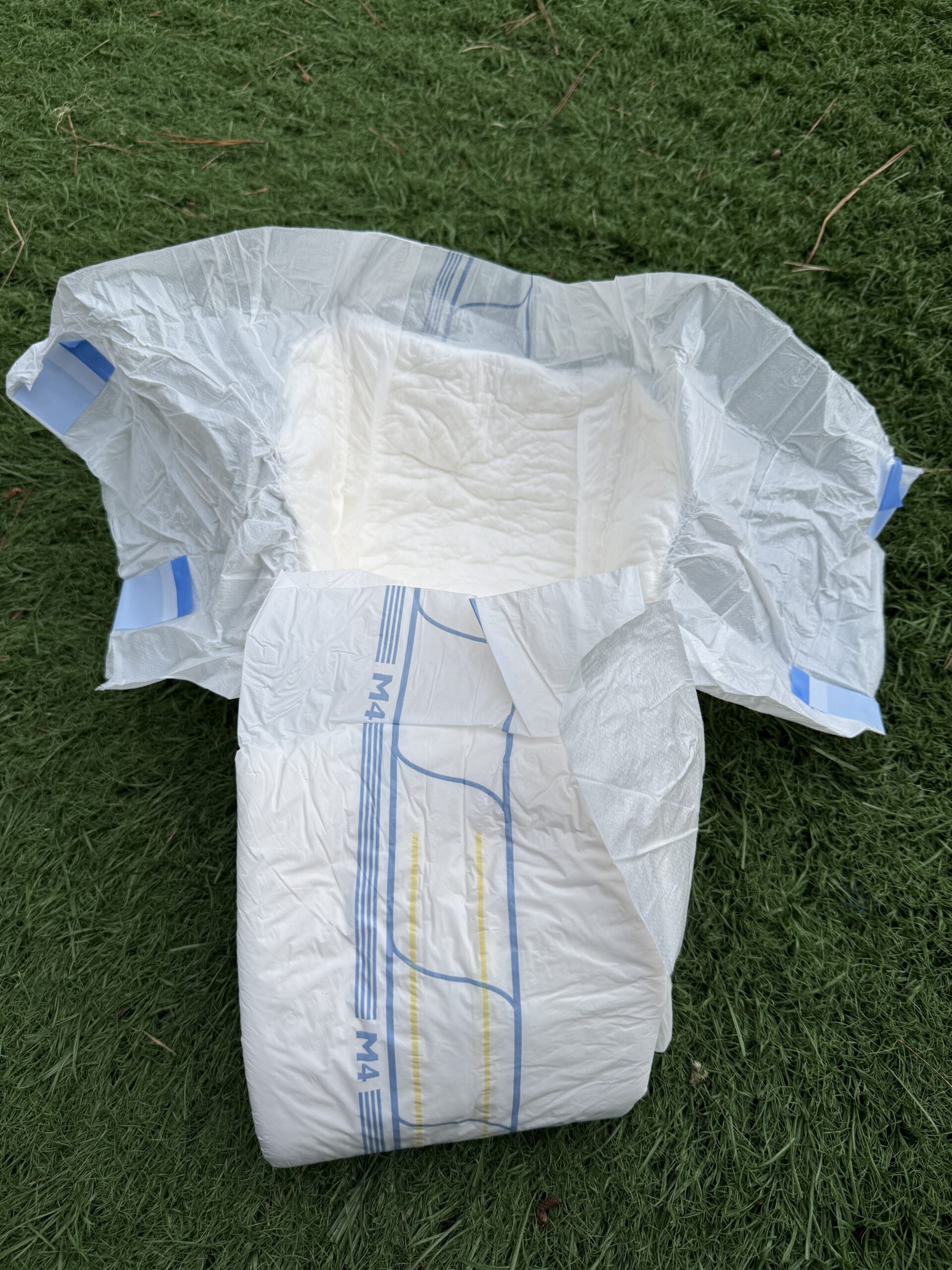
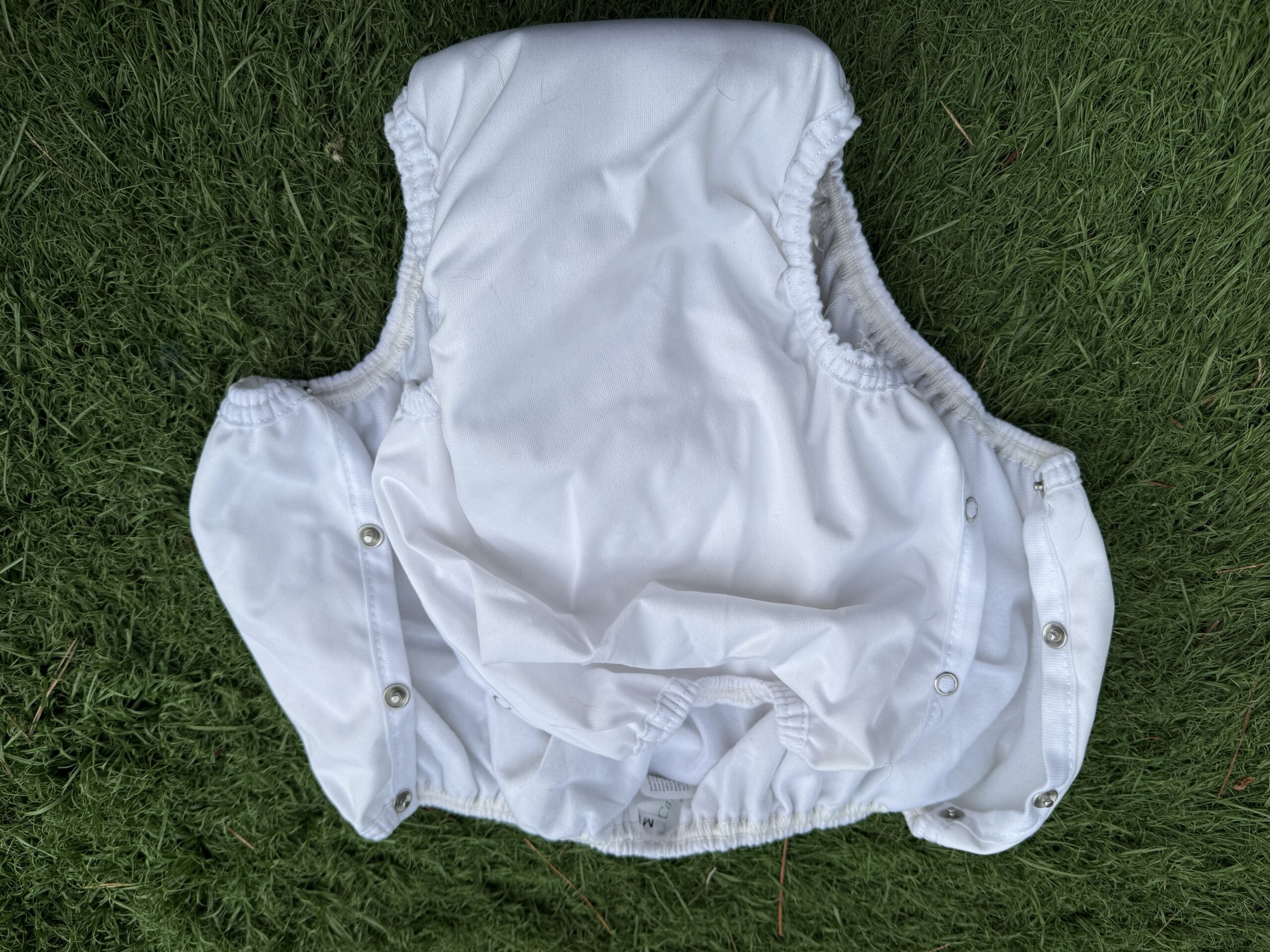
The best known solution (for both men and women) is disposable diapers. Note that my analysis below is of the “medical grade” products that are designed for true incontinence. Products for “leaking” will not really do the job alone. There is a market to support people who suffer from full incontinence so there are products designed to work “overnight” through “multiple wettings;” this is what you want for a multi-hour XC flight. There are two types: pull-ups (like underwear) and “briefs” (which have tabs like you’d put on a little baby). Since these are a consumable medical device you can often order samples (sometimes only for the cost of shipping).
Note that a typical pee is 5.4-13.4 fluid ounces (yes, that’s a big range!). The Abena M4 (which has one of the largest capacities I’m aware of) holds up to 122 fluid ounces in size Medium, but that is in the lab (a single submersion and not taking compression due to wearing them into account). I’ve had it exceed its holding capacity after 4 or 5 (I can’t quite remember) “wettings”, which aligns with the more realistic capacity expectation of about 80 fluid ounces.
Pull-ups
Pros
Cons
You pull them on like underwear, so you can also just pull them down if you need to use the bathroom after you’ve put them on.
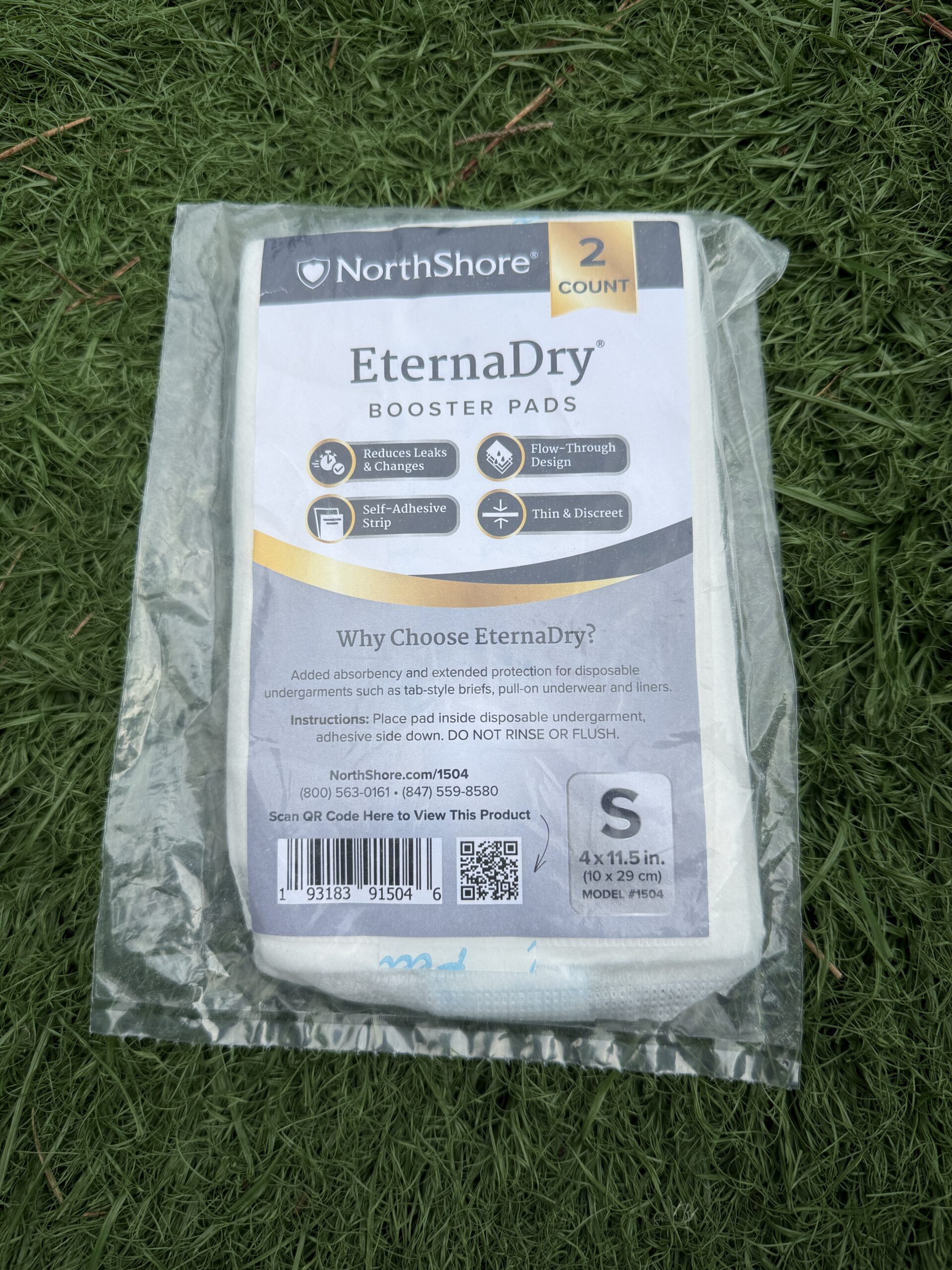
They do not hold as much as briefs (although there are now “booster pads” that you stick in to add an extra layer of absorbency without the bulk in front/back).
They don’t take up as much space as briefs (which is important if you’re bringing a bunch on a trip).
You have to put them on before your pants (or take your pants completely off to put them on).
Briefs
Pros
Cons
Holds the most of any product (especially the “overnight” variety) (and you can still add a “booster pad”).
The closure tabs are designed to be opened and repositioned, but it’s not always reliable. So removing it in order to use the bathroom after you’ve put it on can be challenging. I recommend only opening one side and pushing it down your leg, so at least one side is definitely secure. (For a quick pee before launching it’s nice to have a FUD – see below. You still have to open a tab, but might be able to get away with just one instead of two.)
You can put it on after you’re dressed (although it does require pretty much exposing the full area it will cover – this is where a skirt or dress comes in very handy ;-).
Both Diaper Types
Pros
Cons
No glue, tape, shaving, or waxing is required.
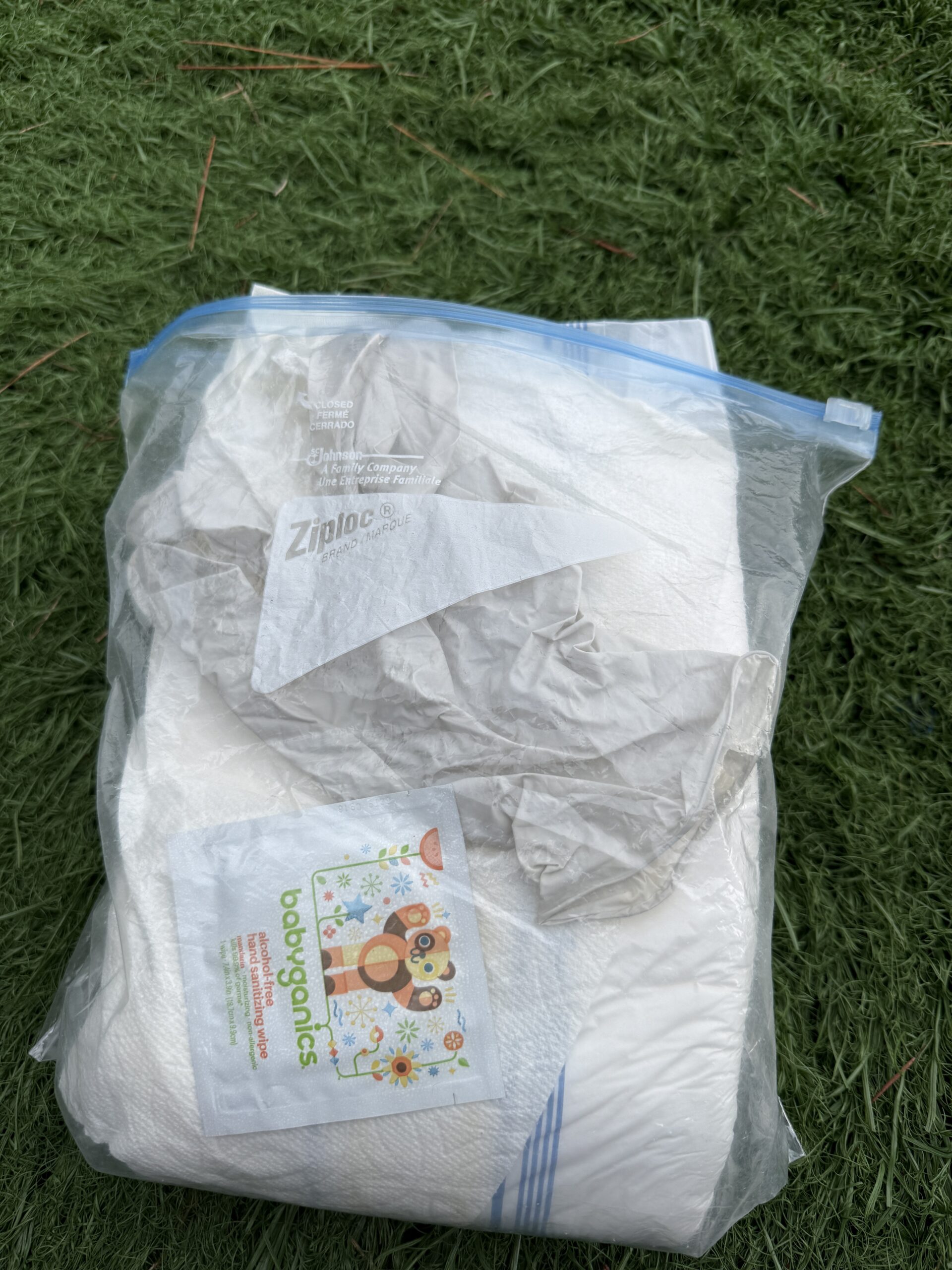
Disposable, which means you need to figure out what to do with them after taking them off (potentially unpleasant depending on how long your flight was!). I like carrying a gallon “ziplock” bag so it can be securely stored until an appropriate trash receptacle is found (zipper lock closure ensures the moisture and odor are 100% captured ;-).
Requires no interaction in-air to use: can be used at any time and your hands never leave the toggles.
Potentially messy while wearing: if the legs are not tight enough liquid can leak out (possibly more an issue for women than men).
Designed for effectively any anatomy (note that they do come in sizes, but they will likely be bulky on everyone – make sure you pick a size that will fit around your widest part).
Potentially messy after wearing: a fully loaded diaper is heavy (think about how heavy your full camelback was!) and the liquid can be squished out if you’re not careful.
Disposable (also a con, but at least you don’t have to wash them).
Bulky – if you are going on a flying trip you might be shocked at how much space 7 heavy-duty diapers take up!
Potentially can be reworn if unused, but if you sweat at all then they’re effectively “used”.
Limited capacity. This is the absolute biggest drawback of diapers and the reason I kept looking for a better solution. They will not hold an unlimited amount of liquid, so if you put too much in there they WILL leak – usually out the back at the top. Which means you have to keep track of how much has gone in there. Which means you’re potentially now in a “flying dehydrated” situation since you might drink less in order to not overflow. The best option when using a diaper is to “size up”: think about how long you are likely to fly (based on weather, your plan for the day, other things on your schedule for the day) and use a diaper (potentially + booster pad) assuming a little longer flight than that.
Both varieties are designed to be “torn off” by tearing the sides of the diaper (which are a thin material with no padding or plastic backing). After tearing the sides you sometimes can sneak the whole thing out from between your legs if it’s not too “heavy” (so you don’t have to undress to remove it).
Relatively comfortable, all things considered: no pinching, designed to have soft fabric-like material against your skin, the fancy ones use super-absorbent materials to keep from feeling too wet.
Key considerations
Practice, practice, practice! This is true for ALL solutions. We’ve all had a lot of training to not wet our pants!
When putting on a brief you need to make sure the openings are tight around your legs, or it will leak. I usually put one side on first, starting securely around the leg (closing with the sticky tab), then close the tab near the top on that same side with the diaper reasonably centered. Then go to the other side: arrange it to make sure it’s in the right place and get the other side securely around your leg. Lastly close the top tab on the second side (which isn’t as critical for our use case).
Bottom-line: There is a reason diapers are the most-commonly-used option for female pilots, and many male pilots use them as well. When they work, they work well. Plus there is a very low barrier to entry. Just be mindful of the Cons!
BTW: be careful where you do your searches for these products – you could end up with a LOT of incontinence product ads in all your feeds (and one company in particular makes giant, non-optimized ad placements that take over the whole window!).
Disposable Booster Pads
As mentioned above, if you want to “extend” the capacity of a disposable diaper you can use a booster pad. These can also be used in tandem with some of the other products below. Note that they are designed to let the excess liquid “flow through” to the diaper – do NOT use them alone or you’ll likely have wet pants.
They come in various sizes, which, in addition to capacity, results in various widths and lengths. I wouldn’t recommend putting a giant booster in a small pull-up: the width of it might just leak right out the legs.
Similar Pros and Cons as described above. They are a relatively new product (at least since I did my original diaper research), but they look somewhat like menstrual pads (or the incontinence pads mentioned below) – with one critical exception: they are designed to “leak” through the backing into the diaper.
Bottom-line: These can be a great way to extend the capacity of your diaper!
Disposable Incontinence Pads (or Guards)
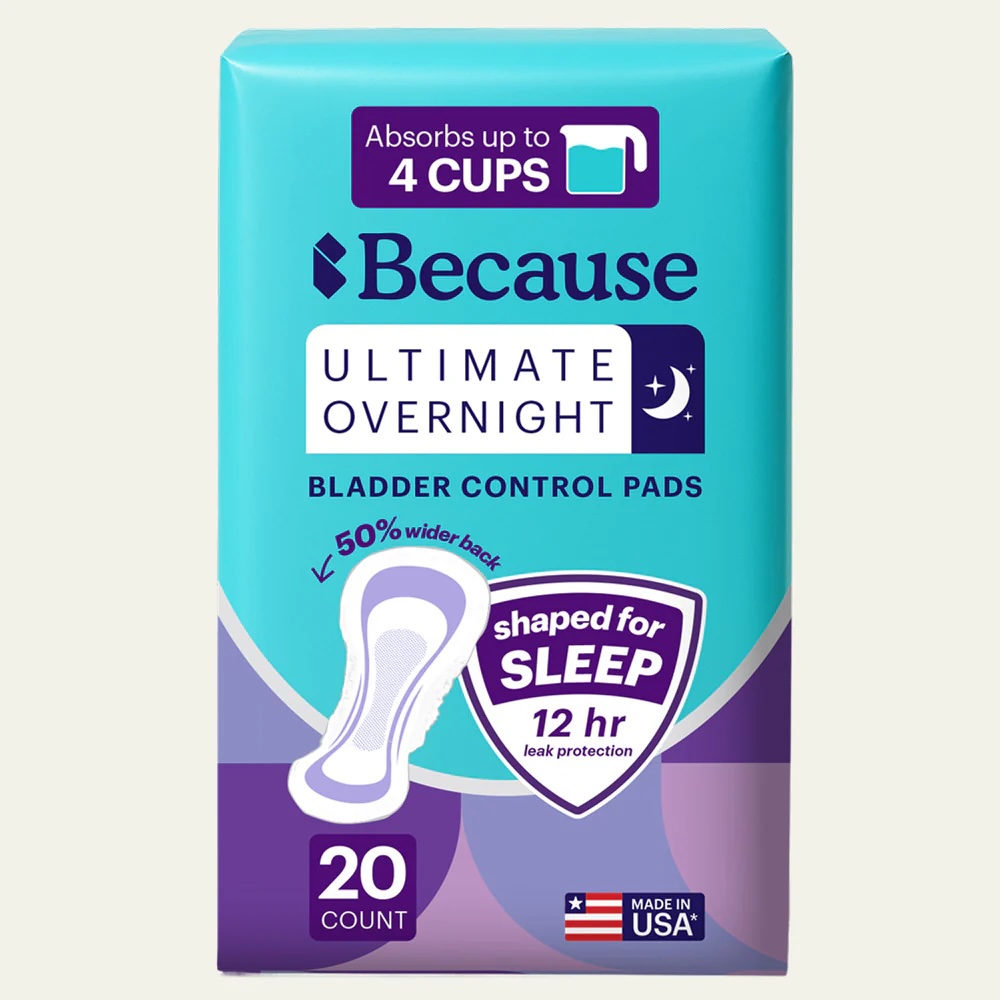
With improvements to absorbent materials there are now also very absorbent pads, similar to menstrual pads. Unlike the Booster pads, these are designed to be used standalone. I’m not sure what sort of capacity they have, but one review said at best they can “hold a heavy dribble”.
They can be useful in combination with another product, such as if you are worried about minor leaking from the She-P (where the bulk of the liquid flows out a tube, but sometimes there is still some moisture to capture). Note that the male version is called a Guard.
Similar Pros and Cons as described above. They are a relatively new product (at least since I did my original diaper research), and are just like menstrual pads, but designed for more absorbency and with a shape more optimized for this use case. Plus there is a version specifically for men.
Note that incontinence pads are not just rebranded menstrual pads: they have greater capacity, better wicking technology, and are typically more absorbent. Some (particularly the reusable products) have urine-specific odor control.
Bottom-line: These are useful for leakage, but probably can’t replace a diaper. Maybe good for one of those flights where you don’t think you need a diaper: this could ensure you don’t skimp on your hydration?
Reusable diapers
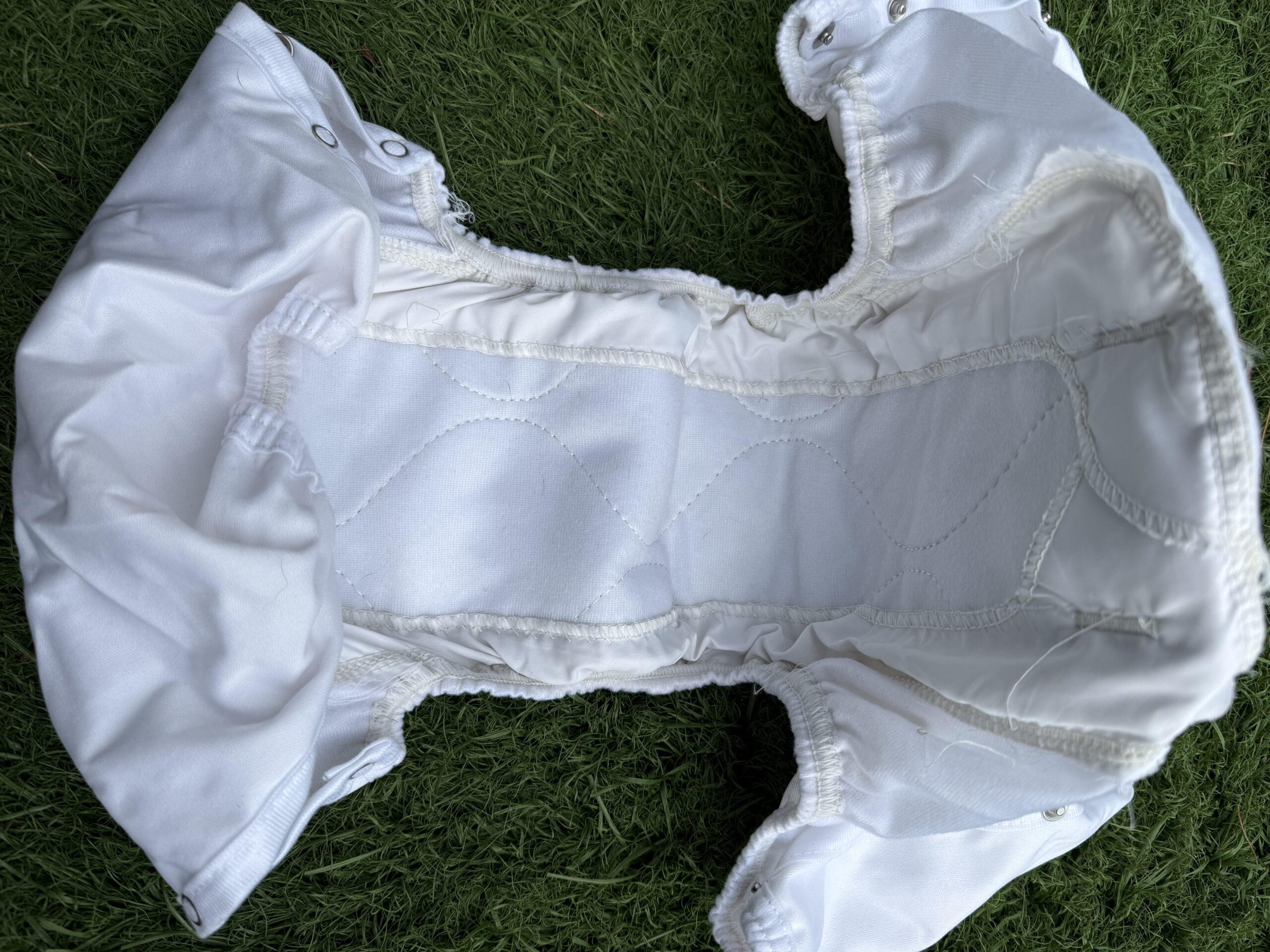
So what about reducing some of the “Cons” of diapers by going with reusable diapers? They’re good enough for babies, they should be good enough for us! Have you ever been in a nursing home? Or even a senior citizen facility? There’s a reason they all smell like urine :-(
Pros
Cons
Reusable! You don’t need to carry one for every day of your trip and there is no waste.
Limited capacity. I have only found ones that are basically cotton, just like baby diapers. So they don’t have the fancy absorbency of the disposable variety.
No glue, tape, shaving, or waxing is required.
Leakage. Again, because they are reusable, the exterior shells are just fabric (no plastic like the disposable kind). Plus the leg openings are not as flexible or stretchy as disposables, so it’s hard to get a tight fit.
Requires no interaction in-air to use: can be used at any time and your hands never leave the toggles.
Cleanliness. Because they’re cotton, and because adult urine is more chemically complex than baby urine, they are very difficult (if not impossible) to clean completely. They definitely require industrial washing (which is often not available when you’re traveling, or possibly even at home), and the smell is harder to remove if the diaper isn’t rinsed immediately (so that long xc+retrieve is a fatal combo for your reusable diaper).
Options specifically designed for those without a built-in external tube
Special undies (aka pee panties)
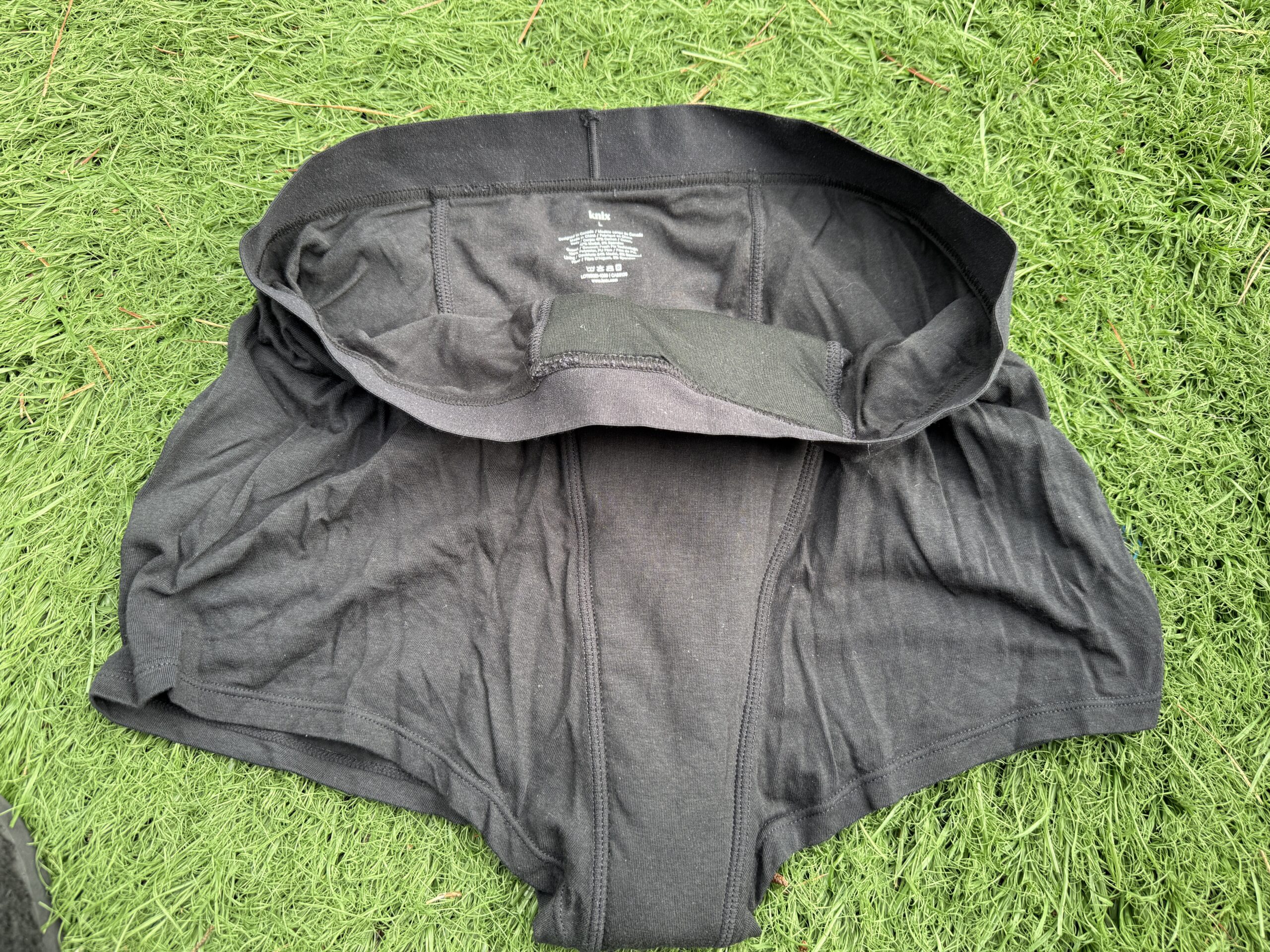
Scientific advances have been made in materials/chemicals for capturing liquids inadvertently released from human bodies. Starting with “period panties”: reusable underpants with special materials for capturing menstrual blood while isolating any odor. Some of those same companies have expanded to offer “pee panties”: reusable underpants with special materials for capturing urine while isolating any odor. They are primarily used by women who experience bladder leaks (not full incontinence), which is a common side effect of aging or medical conditions. These are a useful tool in our arsenal of managing in-flight micturition!
Pros
Cons
No glue, tape, shaving, or waxing is required.
Not designed for men, so might not have coverage in the right place to be useful.
Requires no interaction in-air to use: can be used at any time and your hands never leave the toggles.
Most of them are designed to replace disposable “light/leak” menstrual pads so they don’t hold much. (Many are made by “period panty” companies.)
For shorter flights, a pair of “pee panties” might be sufficient to give you confidence to drink your water!
The best ones I’ve found were from Zorbies, but they appear to have gone out of business :-(
There are a variety of sources, with new ones appearing all the time. As with all women’s clothing, they don’t all fit the same.
Potentially could be combined with a “booster pad”, although the widths don’t match so might leak out the sides.
Reusable! Wash in the washing machine! Because they have special materials they don’t seem to suffer from the odor problem of cotton reusable diapers.
They are specifically designed for urine capture.
Bottom-line: These do seem to work well, but with very limited capacity. If you expect a short flight it’s great to have a truly reusable option. These also are a good option if you’re worried about the slight leaks with something like a She-P (as long as most of the liquid goes down the tube).
“Pee Pants”
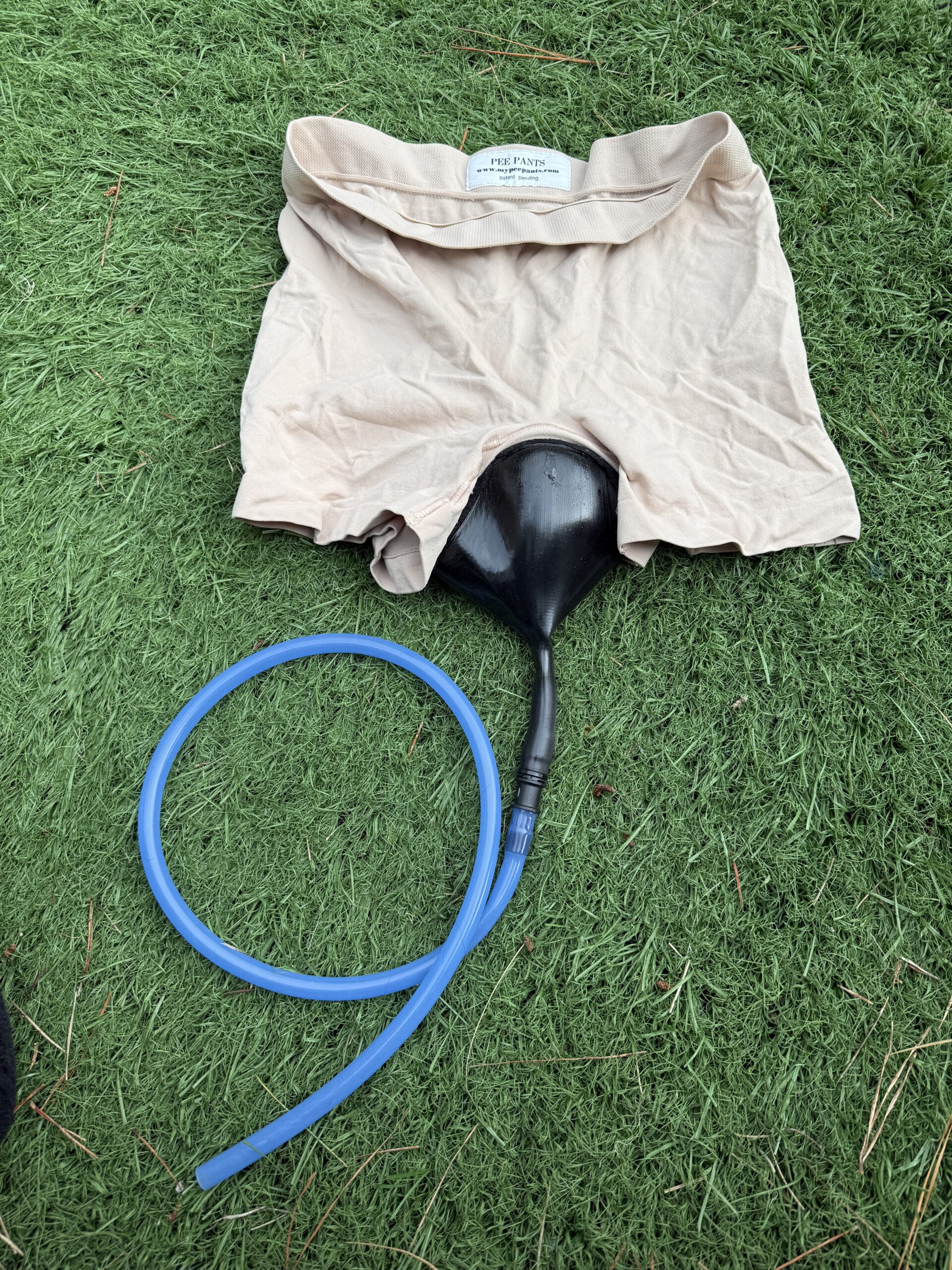
Not to be confused with “pee panties” (see above), a (male) chiropractor on the East Coast invented something for women to be able to pee standing up (targeted at women with unpleasant or non-existent toilet facilities). The Pee Pants’ claim to fame was its use by several female mushers in the 2013 Iditarod Trail Sled Dog Race in Alaska. It’s basically thin bicycle short-style pants with a plasticized funnel sewn into the crotch with a tube coming out of it. Yes, I own one. No, I’m not actually the first female pilot I know who has bought it. Yes, I tried it (in the bathtub). No, I’m not aware of anyone who has actually tried it in-flight.
Pros
Cons
Like all of the above, there is no glue, tape, or hair removal required.
It’s unclear how it might actually work while in-flight. The challenge is that the funnel is very flexible. This is very comfortable for sitting on in your harness. However, even without the challenge of routing the tube, the slightest pressure on the funnel opening means the pee just backs up (and out of the funnel area into the pants area). Need I say more (I probably already said too much)?
It is reusable.
Bottom-line: Do not recommend.
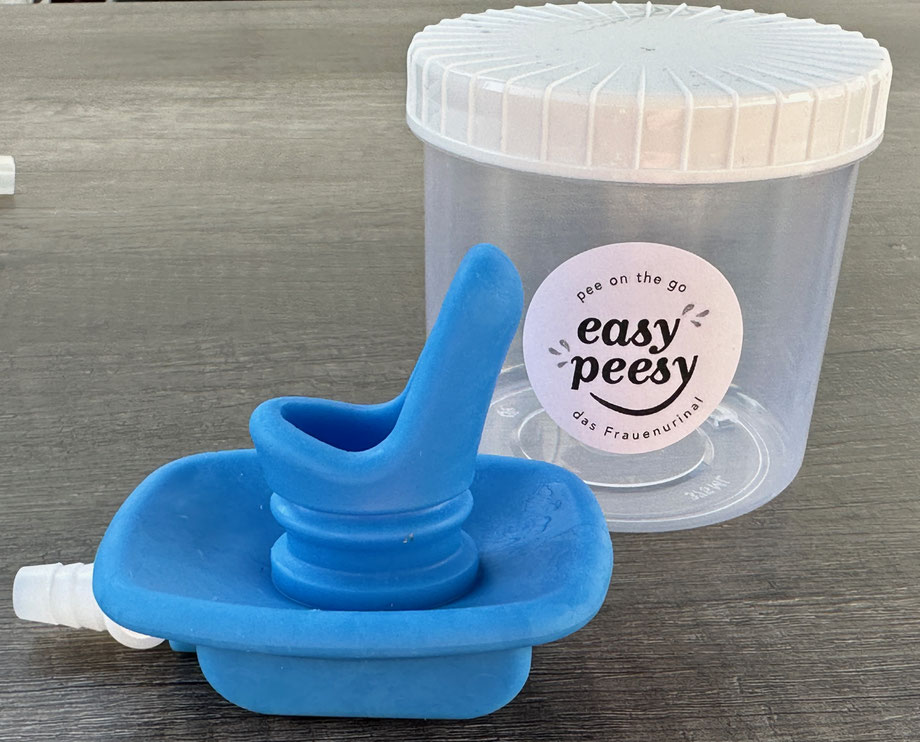
Easy peesy
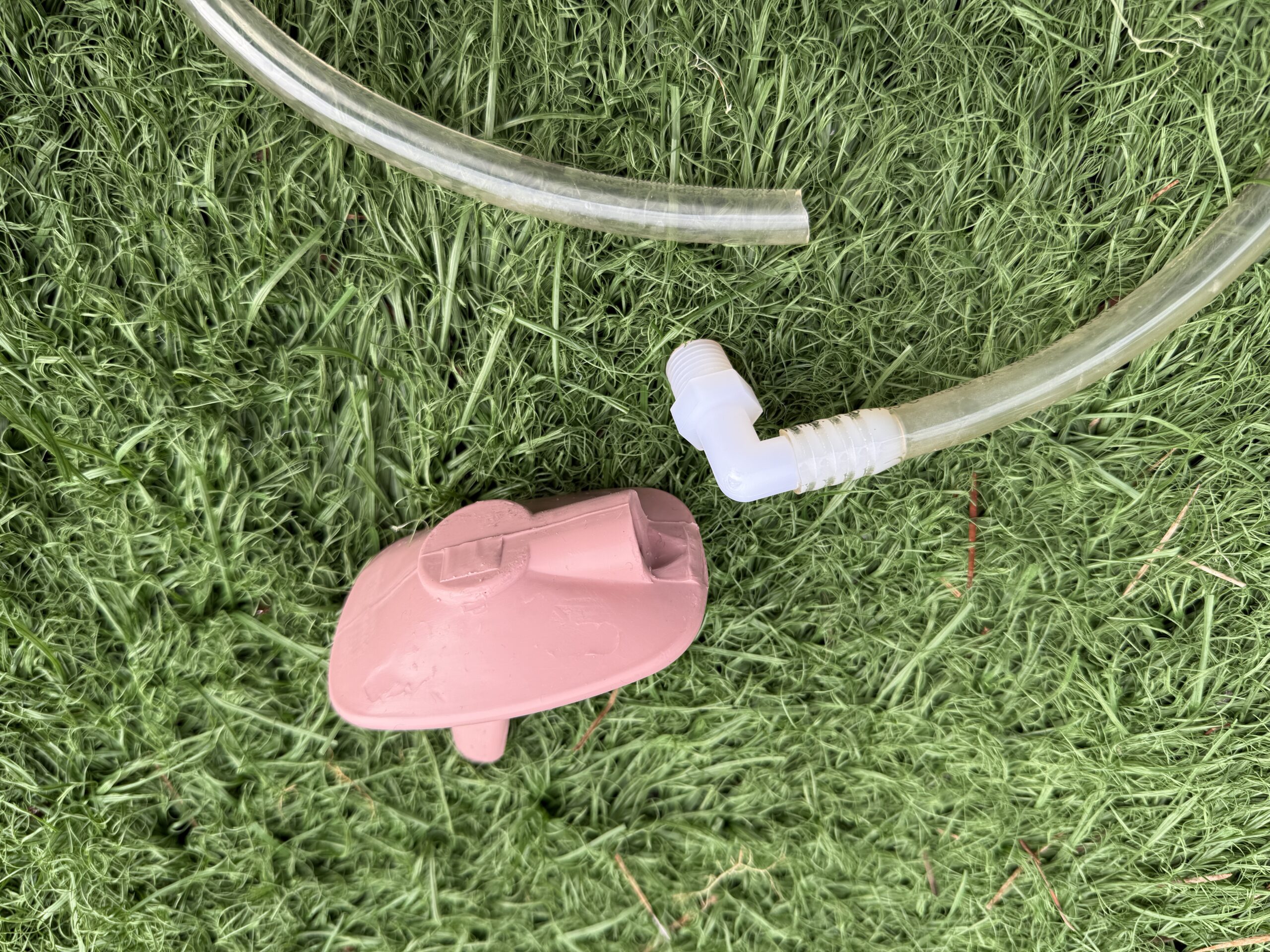
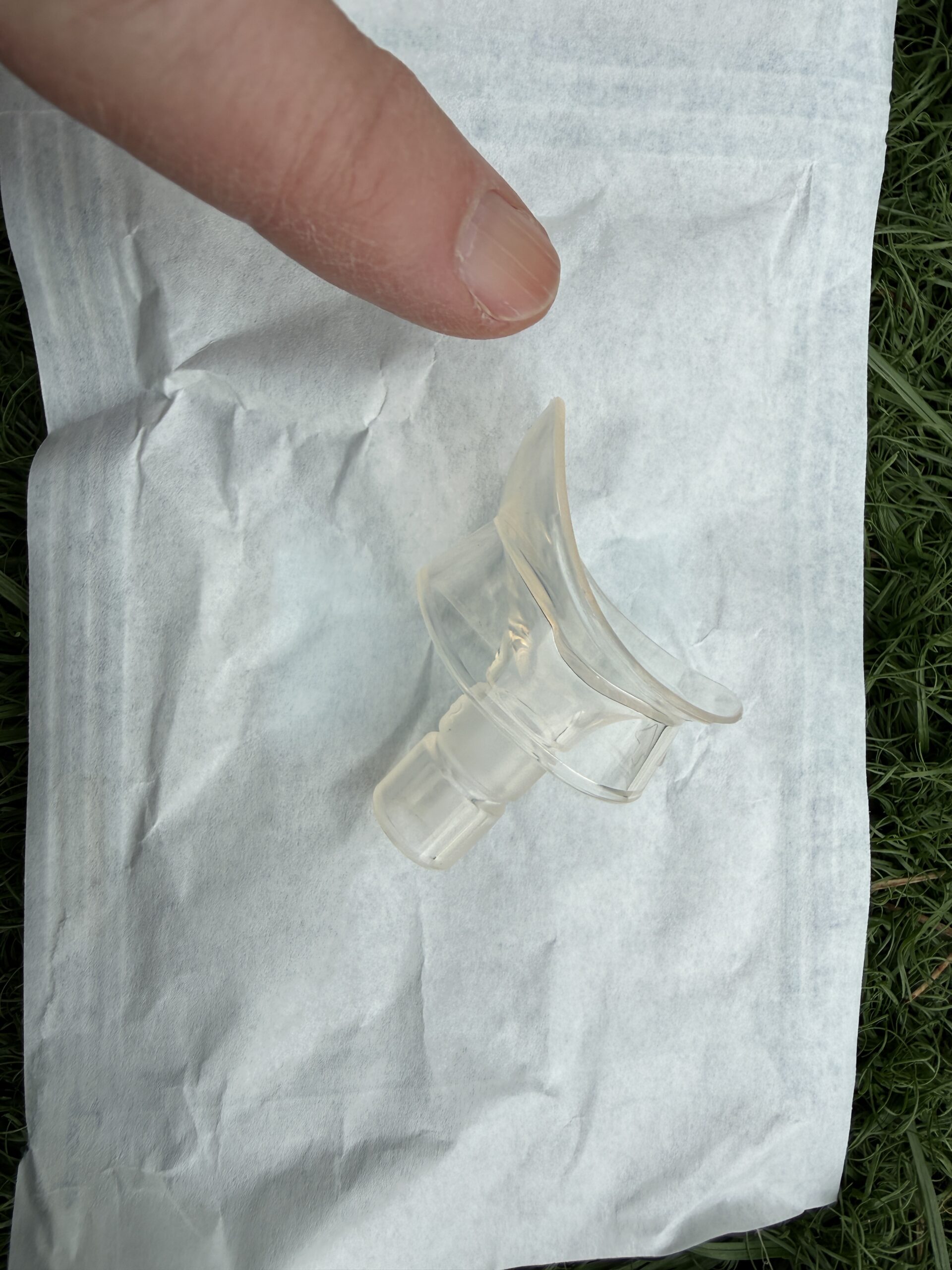
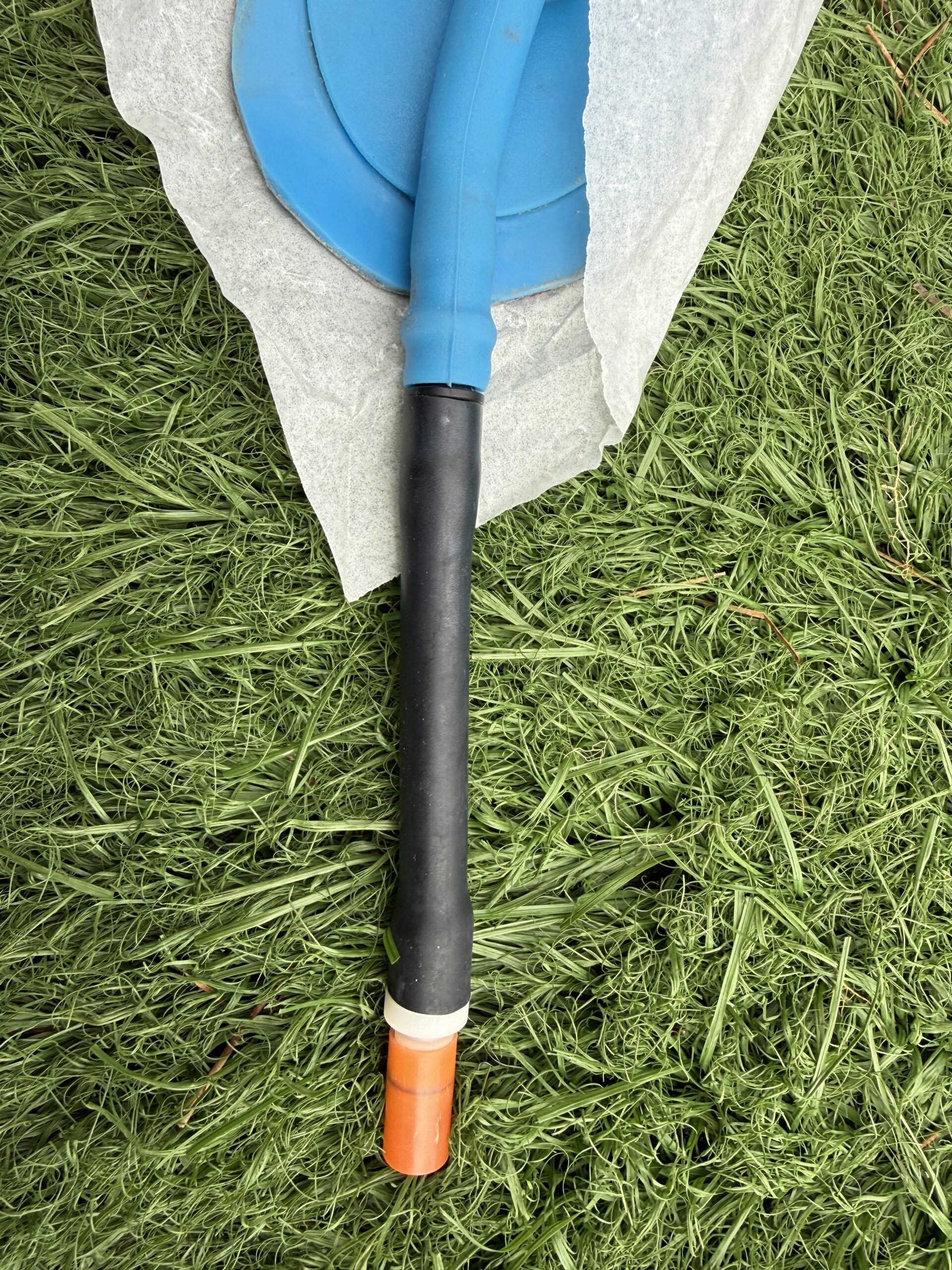
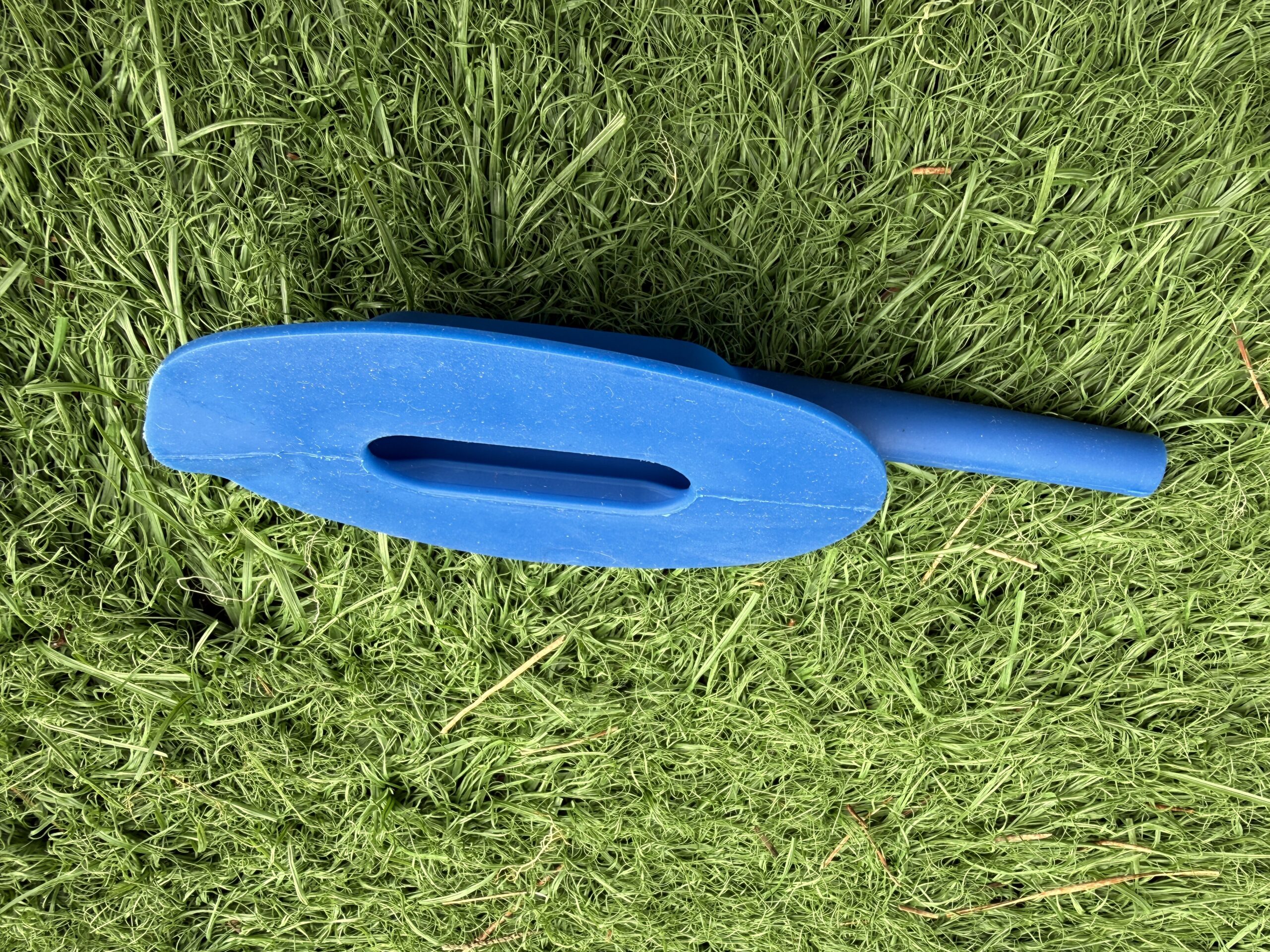
A female competitive long-distance small plane pilot invented the “frauen urinal” (“ladies urinal”), rebranded as the “easy peesy”. The original (pink) was designed to attach to a bottle in the cabin. In researching this article I discovered that some female paraglider pilots have successfully used this device! I have no idea how they did it, since I found it extremely uncomfortable and fussy. The latest version (blue) is made out of silicon, which is softer than the original. However, it still has the same issues and is also no longer smooth on the “outside” surface. The original intention was it had to be put into place only as needed, but I’m eager to hear from any women who have used it successfully while paragliding!
Pros
Cons
As with all of the above, there is no glue, tape, or hair removal, and it’s reusable.
The original was made out of a very dense material and is very firm. Even the updated version still has two very solid/hard spots (in the center of the multi-part mold and at the plastic connector for the tube). It is extremely uncomfortable to sit/rest on.
It is designed to attach to a tube to route the liquid “into the void” (so to speak). This is our first “infinite use in-air” product that might actually work!
The routing of the tube out of the device puts pressure on a very delicate part of the anatomy. (I added the L connector, since I wasn’t sure how else to connect a tube – it now comes with a straight connector plus a tube, but it’s still in the same sensitive spot.)
I’m not entirely sure how you either (a) put it in place once airborne, or (b) walk around and then launch with it in place. I’ll include a link in my Resources page to the testimonials from two paraglider pilots if you’d like to follow-up with them for more info on how they managed to use it. Maybe tape was involved?
Bottom-line: For me this was much too uncomfortable, but perhaps your anatomy would tolerate the pressure better? The idea of no glue required is very appealing, so I am exploring a hybrid of the easy peesy and She-P to try to get the best of both worlds!
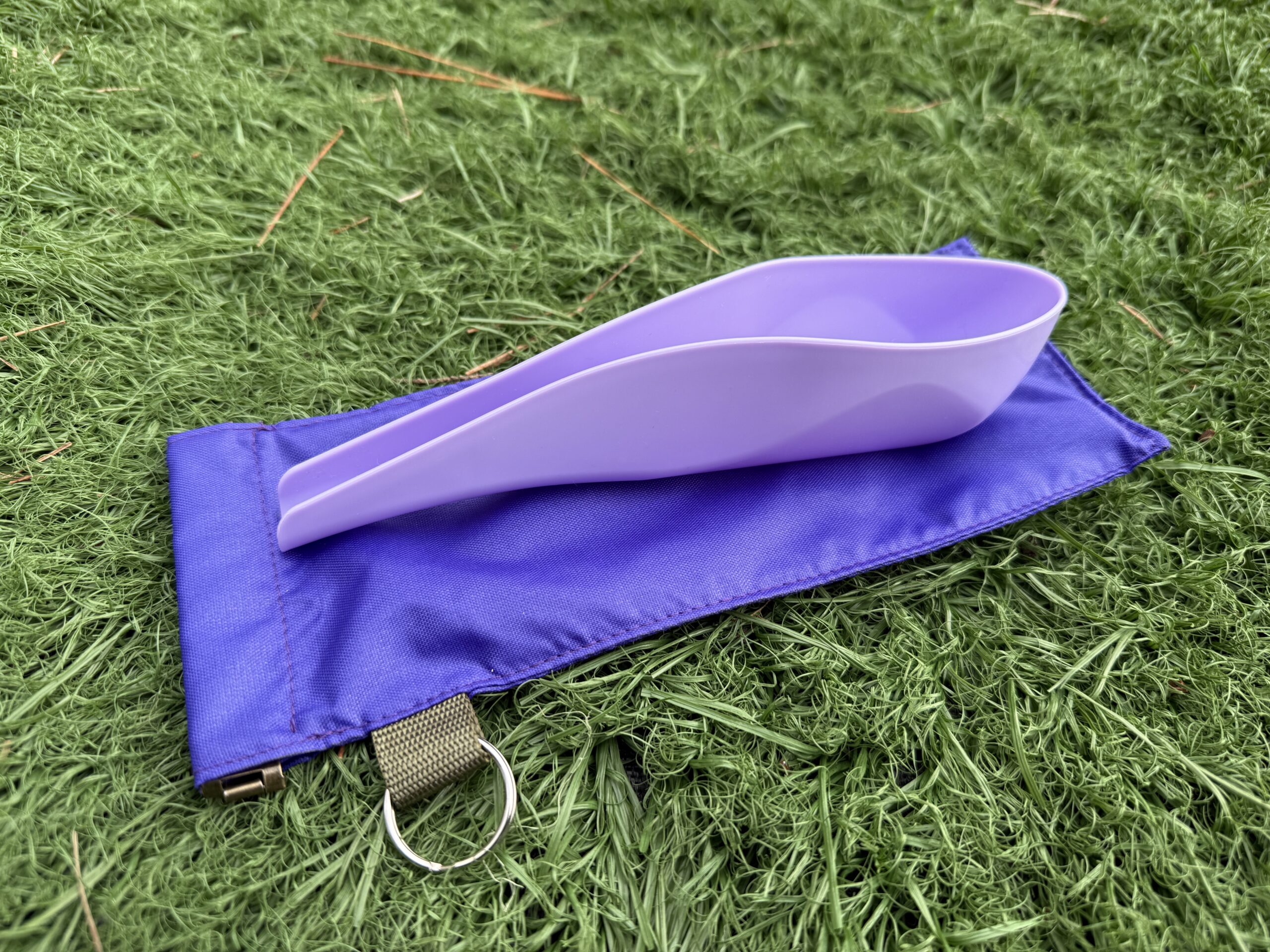
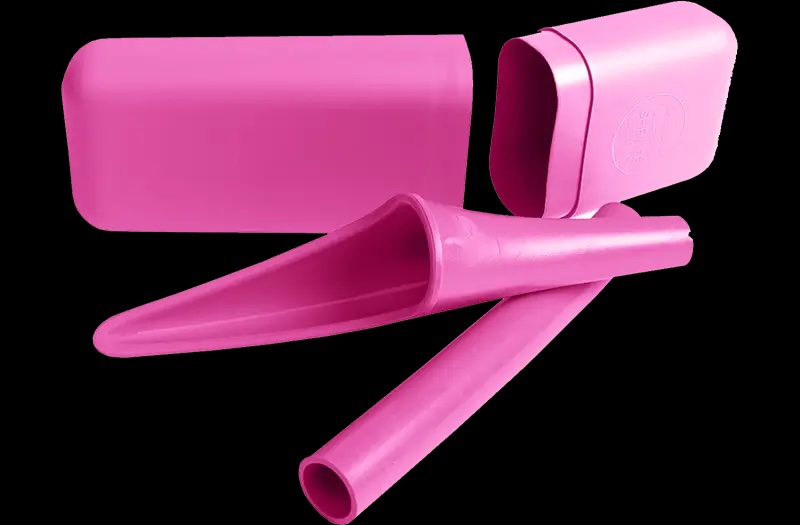
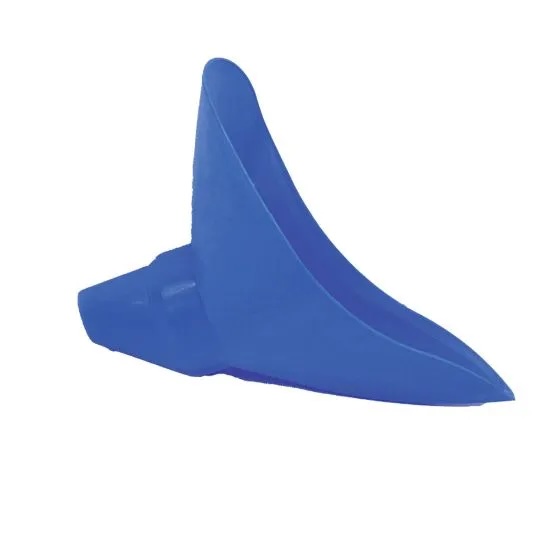
FUD: Shewee, pStyle, Tinkle Bell, Freshette, GoGirl, Pibella, etc.
The backpacking world created a demand for the FUD (female urination device) so that girls could pee while standing up (without drenching their clothes). There are now numerous options available (even more than I’ve listed above): some have wide openings, some have tiny openings, some are hard plastic, some are flexible silicon. I’ve tried several of them, and they are great for turning your back and peeing on launch “like the boys” and some even can readily attach a tube for redirecting the output. The challenge I believe (as with the easy peesy) is how do you get it in place when it’s time to “go”?
Another item in this same vein is the Lady J – an adapter intended for use with the Little John bottle. It has much wider coverage than a traditional FUD (and an enclosed outlet), but with that larger size it could be even more difficult to get into place and quite uncomfortable to sit on.
Pros
Cons
As with all above, no glue, tape, or hair removal, and it’s reusable.
It’s hard to imagine getting it into place while flying. Perhaps if you’re in an open harness and going commando it would be relatively straightforward (if it’s a forgiving, rigid product like the Freshette). But that’s less common for big XC/long flights, so the diaper is probably a more reliable (less risk of mess) solution.
There are many, many variations, so you can find what works best for your anatomy and transport preferences (I do recommend one if you use diaper briefs).
Most are not designed to be used with a tube – some are even open on the top.
Bottom-line: Definitely useful on launch/landing. Possibly useful in-air within some significant constraints. I have heard one report of success using medical adhesive – such as those used with the She-P – applied along the edges to hold a FUD in place in flight. Your mileage may vary.
PureWick™
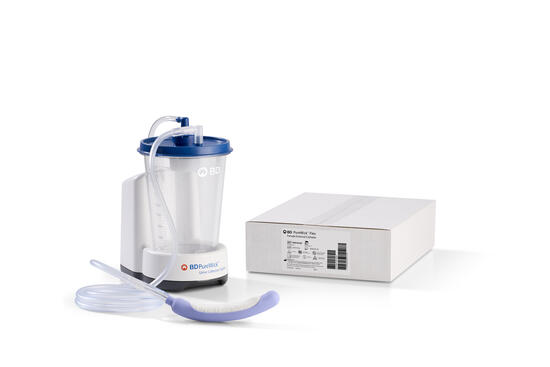
A friend was recovering from an injury and was provided this external catheter to prevent her from getting up too much. It’s basically like an absorbent hot dog (some look more like hot dog buns) attached to a little vacuum cleaner. She realized it would be great to have something like this in-flight! She looked into how to adapt it but was ultimately unsuccessful :-( I’ve included it here for completeness, and also in case any of you are aware of technological advances that would warrant revisiting the idea! (Some of the Navy Pilot solutions used this same approach.)
Pros
Cons
No glue, tape, or hair removal, and infinite use in-air!
The amount of suction required for it to work exceeds a feasible power source for us to carry in-flight.
Requires no interaction in-air to use: can be used at any time and your hands never leave the toggles.
Just needs to be put “in place” and suction does the rest
Bottom-line: Maybe once we have much denser power supplies available this could be revisited!
US Navy Fighter Pilot solutions
I myself am not a Navy fighter pilot (for the US or otherwise), so have no first hand knowledge of these devices. They clearly share a lot of the same requirements and constraints that we do, so it’s always interesting when a new one is mentioned. However, while they share most of the same pros, they also share most of the same cons….
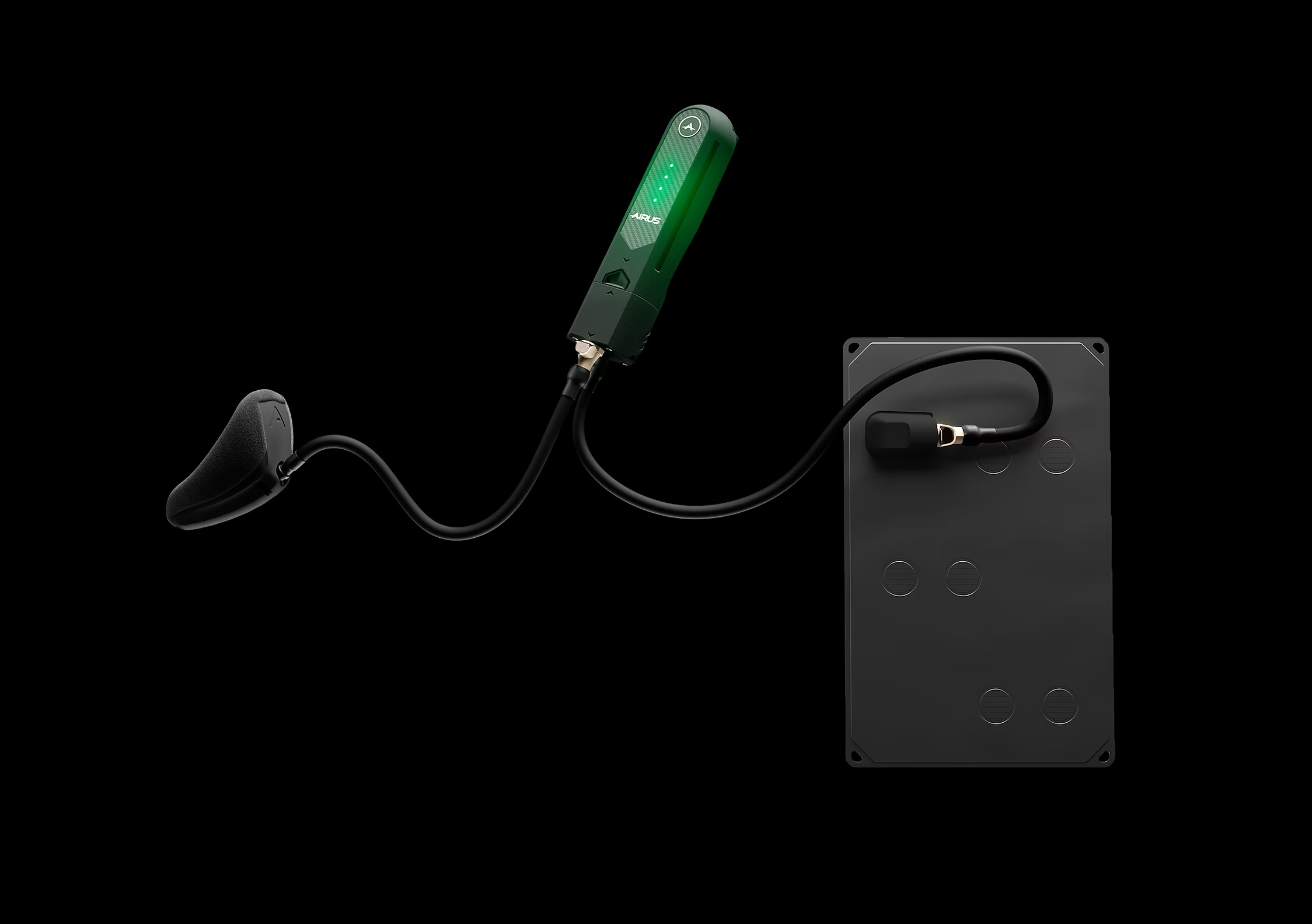
AIRUS
The US Navy commissioned creation of a device: the AIRUS (Advanced Inflight Relief Universal System). This is the most recent advancement.
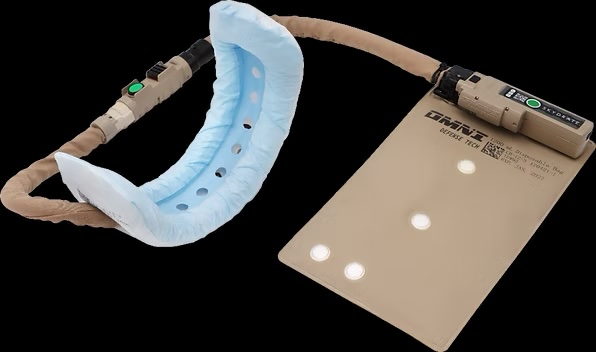
Skydrate
This is very similar to the PureWick (but likely at DoD prices ;-). I believe the pad is actually inflatable, in order to provide the best seal.
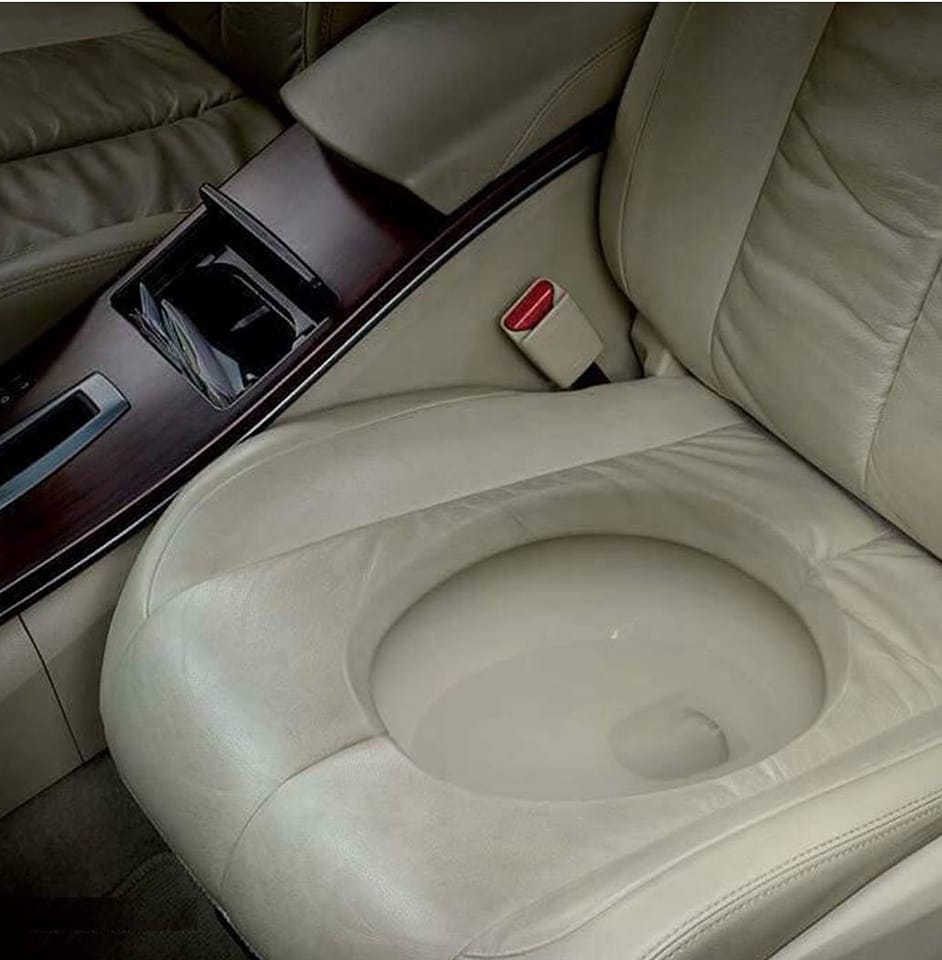
Integrated toilet
I read that there was an attempt at making a pilot seat with an integrated toilet, but I can no longer find a picture (I’m imagining something like the third photo for a concept car). My friend who explored adapting the PureWick has also looked into how to integrate something into a harness. So far no prototypes (that I’m aware of) but we’re all cheering her on!
Pros
Cons
No glue, tape, hair removal, and infinite use in-air!
Expensive or completely unavailable.
Requires no interaction in-air to use: can be used at any time and your hands never leave the toggles.
Requires a pump (more power and weight than we can carry in our craft).
Some options require removing/opening some clothing.
Other options require special clothing to hold the device in place and route to the pump.
Bottom-line: While it’s nice to know solutions are being pursued, nothing is an option for us (yet).
UriCap
The experiments with the PureWick got me wondering what other female external catheter options there might be. The UriCap is very small, very flexible, and is designed to be held in place simply by natural suction. Sounds perfect! Unfortunately it’s targeted for use when patients are sleeping (preferably on their sides and unable/unlikely to move during the night).
Pros
Cons
No glue, tape, or hair removal, and infinite use (potentially).
Requires holding position for an extended time while the natural suction “solidifies”.
Designed to have a tube for output.
The natural suction is not very strong, so is easily dislodged with most movements.
Was unable to get it to work.
This is another device that others might have more luck with than I did. I had hoped that the things that created challenges with the She-P might be advantages with the UriCap, and although it didn’t turn out that way for me, it might be a step in the right direction!
Bottom-line: Might be worth further experimentation. I’m also considering the design of the UriCap in my explorations of some sort of hybrid of several of these products.
She-P
Created originally for female dry-suit divers who wanted to use a “pee valve” during long dives, the female paragliding community has embraced the She-P as the “gold standard” for infinite in-flight micturition (for those who don’t have a built-in external tube). It essentially allows us to glue a silicon dish over our internal tube so we can connect to an external tube. Yes, glue. Lots of glue. There is a Facebook group (see Resources for details) providing a community to help solve common challenges, understand variations that might be needed, share tricks and tips, and provide support for those (like me) who took years to finally get the thing to work.
Pros
Cons
Infinite use in-flight.
Requires glue and/or tape. Some people need a lot of glue. Some people need glue and tape. Some people live charmed lives and only need tape, but some of us don’t believe them :-D
Requires no interaction in-air to use: can be used at any time and your hands never leave the toggles.
Requires hair removal (or at least a close trim). Optional, but think “ripping off a bandaid” and then imagine where that bandaid is stuck.
PG kit includes a quick-disconnect for the tube, so you can attach it when getting into your harness (and use the “weenis” to pee standing up until then).
The glue (or skin prep, or glue removal product) might sting like someone lit a match down there! But there are multiple options so hopefully you can find something that works for you (see the Resources doc for details).
Extensive community knowledge and support.
Imperfect. It CAN leak. In so many ways. This is where the Facebook group is super helpful. Basic issues are: leaks out the back (a very tricky place to get a secure seal), leaks out the front (might not be long enough for your anatomy – more material can be added!), leaks out the sides (a wrinkle or stray hair creates a little underground aquaduct), leaks randomly (you might not have enough glue).
Reusable (no disposable parts).
Expensive. This was invented by a scuba diver and they are still made essentially by hand as a passion project. If you want one please buy an original (details in the Resources). If you need a backup (or really, really can’t afford it) there is at least one knock-off at a lower cost.
If leaks are small, the addition of a diaper (or reusable pee panties or a pad) can provide a lot of reassurance – just make sure they cover the area where the leak might happen (around the edges of the device itself).
For some women the design simply doesn’t align with their anatomy. I’ve discovered a way to make a semi-custom shape using liquid silicon rubber, and so far it works great (and is SO much more comfortable). I’ll include all the details in the Resources doc.
Bottom-line: This is what most long-distance female free-flight pilots use. Does it have Cons? Yes. Is there a better option for long flight? Not that I’m aware of.
Exercise for the reader
Another possibility it seems would be an internal female catheter. I’ve never used one so have no direct information, but it wouldn’t have glue! My understanding is that a common side effect is urinary tract infection, so maybe it’s not feasible. But it would be interesting to know more!
Next up: what are the options for people with built-in external tubes?
Options specifically designed for those WITH a built-in external tube
Starfish Position
This technique is most feasible for those with built-in external tubes, although some women might be successful when using a FUD. I personally have never tried it, but I understand that you lean forward in your harness, assume the “starfish” position (at least with your legs), partially undress, whip out your tube (built-in or otherwise), and try to avoid splashback. Flying downwind is recommended. Note that for men, a MUD (described below) might minimize some of the Cons.
Pros
Cons
No glue, tape, hair removal, and infinite use in-air!
Requires letting go of the control toggles, which also limits when you can relieve yourself (for example, might not be possible in very strong conditions).
Requires no additional equipment (for men). No advance planning is required.
Complicated in a pod or with a front mounted reserve.
Clothing and leg straps likely need to be chosen/arranged with this technique in mind (even more so for women using a FUD).
Urine is released close to the pilot and equipment, so splashing is more of an issue.
Might require more time with hands off the controls than is appropriate for the conditions. Alternatively, limits your opportunities for relief.
Bottom-line: Many pilots only ever use this method, so it seems quite feasible if the logistics work out for you.
MUD? (Male urinary devices)
Screenshot
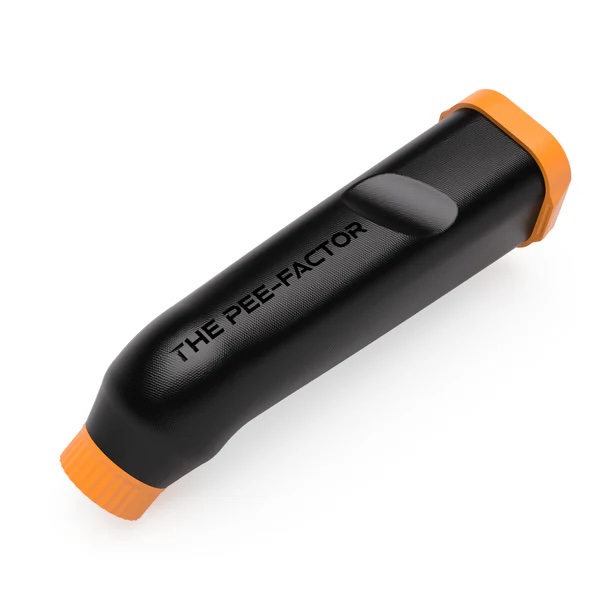
Long before 3D printers could be found in every other home, Marcos Rosenkjer (a paragliding pilot) invented a device to be an alternative to the basic Starfish without the commitment of Condom Catheters. It was made of molded hard plastic, had a slight angle, had a place to tie a string in order to secure it to your harness (just so you didn’t lose it), and was bright orange with a hose attached (it might have been called the Pee2ube, but later rechristened the Sky John). It was effectively a MUD (male urinary device, akin to the FUD). While researching this article I came across “The Pee Factor™” and the “easy peesy for man” (from the same people who make the easy peesy for women) which are also effectively a plastic tube to redirect the urine; you can even attach a tube or bottle if desired.
Pros
Cons
No glue, tape, hair removal, and infinite use in-air!
Requires a position similar to the Starfish method (unless you can use a hose).
Infinitely reusable (no disposable parts).
Is reported to be very “fiddly” and requires a significant amount of time with your hands off the controls.
Allows you to redirect and minimize potential backsplash.
Might make use with a pod or front mount reserve more feasible.
Bottom-line: Most of the Pros of the Starfish method, with fewer Cons. Might be all that is needed for pilots who struggle with the basic Starfish, as long as they fly in appropriate conditions.
Pee Pant for Men
Turns out there is a “pee pant” for men, too! Amazon suggestions turn up some surprising results sometimes :-). I don’t know of anyone who has used this product, but I can imagine it might have some of the same Cons as the women’s version, given how our harness straps fit and the challenges with any collapsible material combined with liquids.
Pros
Cons
Like the Male Urinary Devices, there is no glue, tape, or hair removal required.
It’s unclear how it might actually work while in-flight. (Might have similar drawbacks of the “Pee Pants” for women.)
It is reusable.
Bottom-line: Probably not a viable option, but I’ll leave that as an exercise for the reader.
Condom Catheters
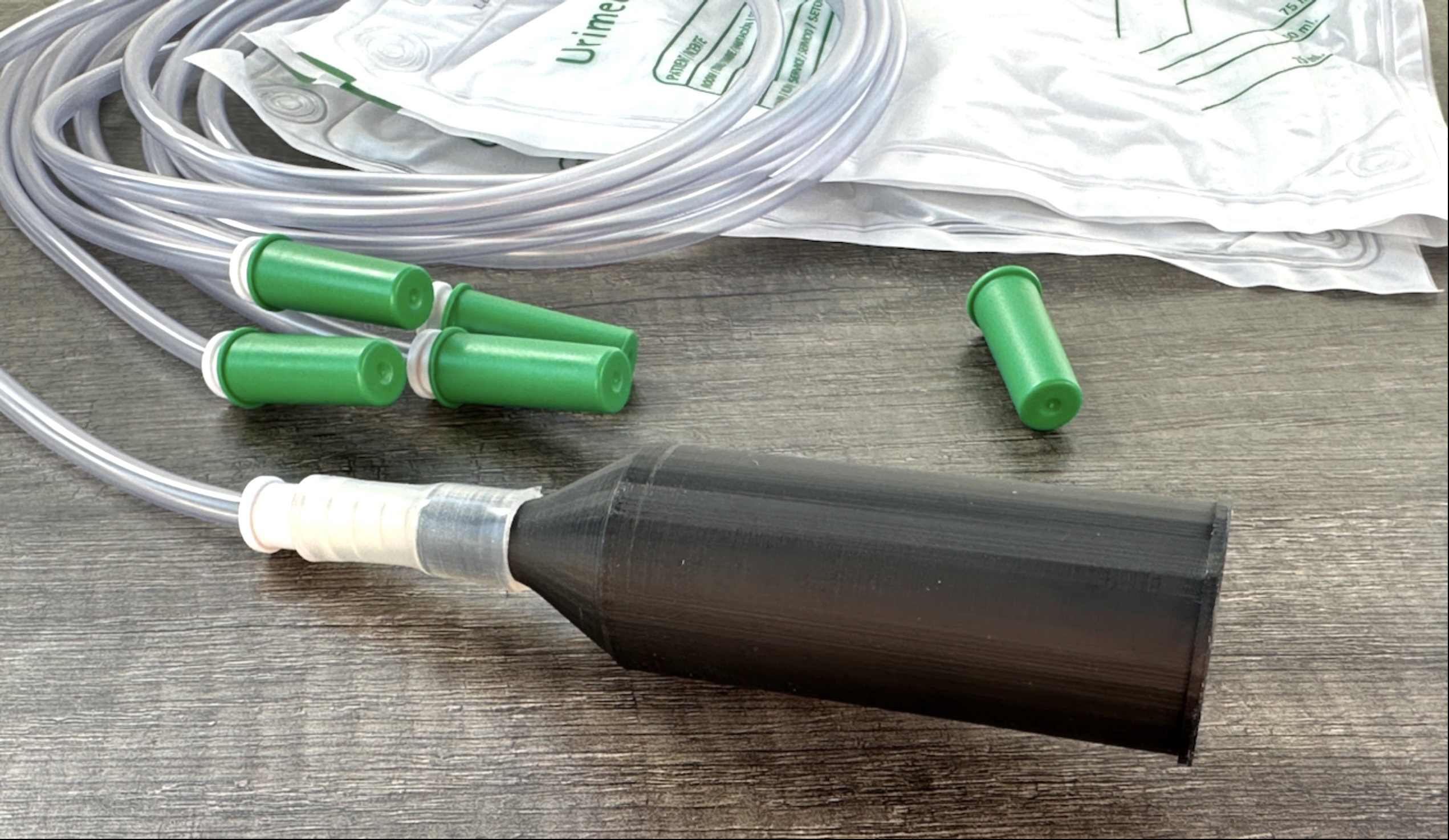
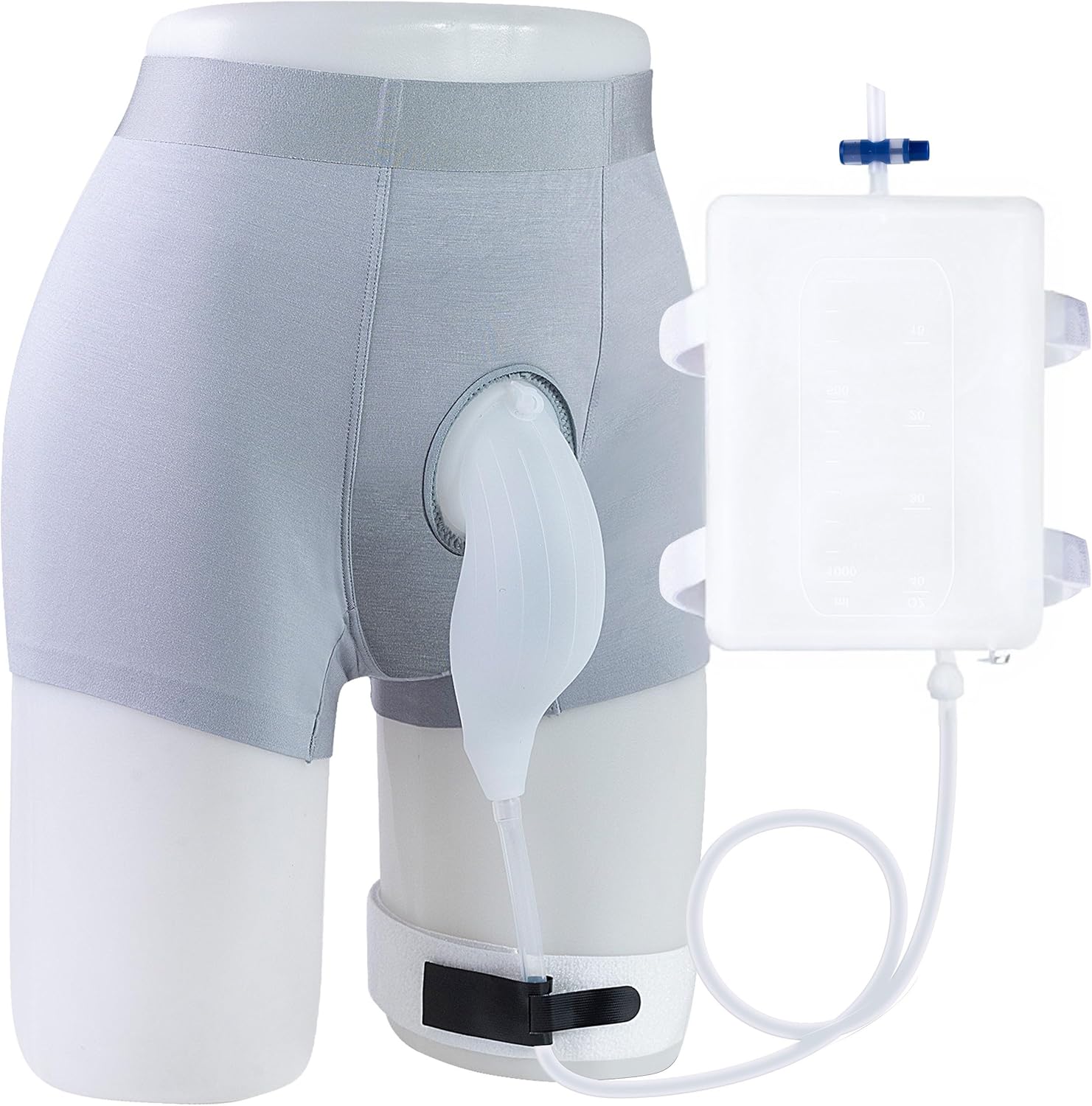
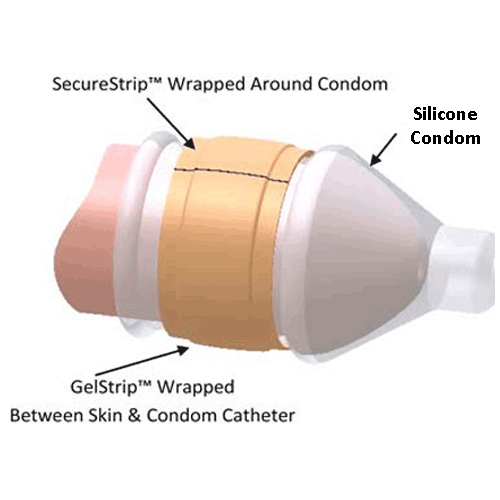
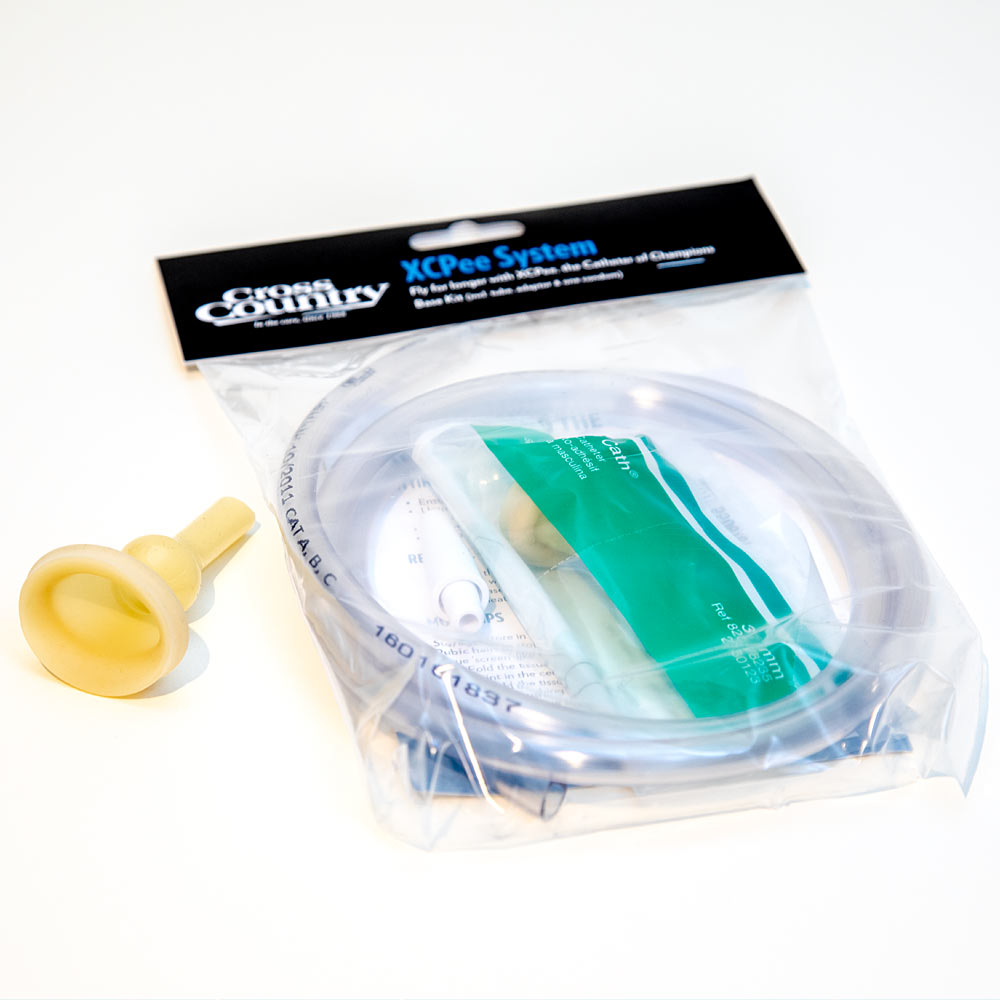
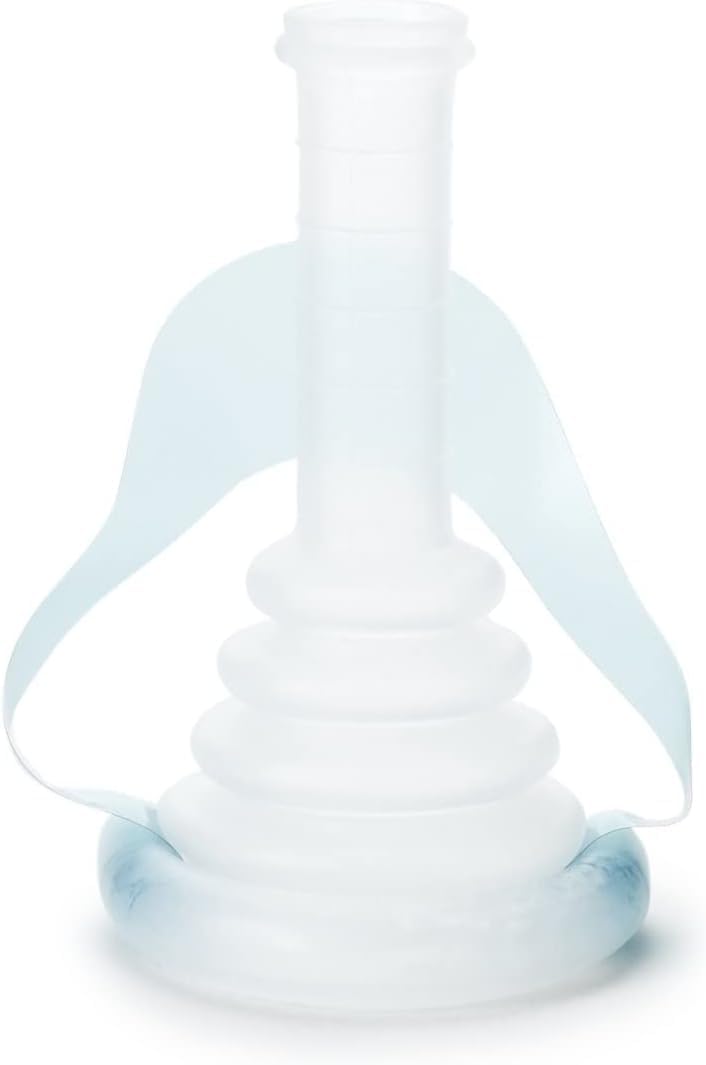
These are easily the most popular option among those who can use them – at least for pilots who fly long distances. The pictures should be pretty self-explanatory, but the basic idea is a special condom with the end designed for connecting a tube. There are apparently multiple styles/brands, so you might want to try different types to find what works best for you. Since these are a consumable medical device you can often order samples (sometimes only for the cost of shipping).
I am definitely not an expert (nor do I have direct experience), but from my understanding and a quick survey of some users here are the pros and cons.
Pros
Cons
Infinite use in-air!
Requires carrying the appropriate equipment and installing it prior to flight.
Requires no special positioning or movement of the harness; works with all harness types.
Disposable, so you need to carry the used device until you can throw it in the trash (also, makes more trash).
Can be set up so that hands never leave the controls (so relief can be found virtually any time).
Some people require adhesive (glue or tape) to secure the catheter in place, which may cause skin irritation and adds inconvenience. (Check Resources for a product that might help with adhesive removal discomfort.)
Readily available (they are a standard medical device) and often even available to purchase at competitions.
Pinching of the tube may result in disconnection or malfunction of the device, rendering it useless (and possibly also creating a mess).
Come in different sizes (and styles) for comfort/best fit.
Have an adapter so you can attach a silicon tube and route the pee away from your body a variety of ways (see the Resources for more about tubes and routings).
Disposable (although this is also a Con) means it’s common to have spares on-hand and you don’t have to wash them out after use.
Bottom-line: This is the most popular method used at competitions and for long-distance flights because it is the easiest to use in-flight and you can pee as many times as you’d like. While there are some Cons they are relatively minor for most men.
Don’t forget: you have to practice peeing when dressed! Since you were a toddler you have been indoctrinated to NOT pee with your pants on. Practice helps. Breathing exercises help. Focused concentration helps. Waiting until you are going to burst does not necessarily help (it might even “hurt”: not just physically, but none of the devices we have available do well with a flood – it’s better to have a steady stream, preferably with a test trickle to ensure the system is in working order before letting go). And even once you are successful in-flight, you may occasionally need a new trick to make it happen.
Many tips and tricks for overcoming all those natural instincts are included in the Resources document (referenced below), but I recently heard some great, simple advice on getting the flow going: cough!
Also, be polite in-air! If you are using a method that does not capture the urine be sure there are no pilots below or behind you when releasing.
Remember, there are basically two options for free-flight pilots:
Option 1: Fly with an in-flight micturition system
Option 2: Fly dehydrated
There’s a reason so many pilots are flying with one of these: increased performance! Join us (there are lots of people out there who have gone through all the trial – and error! – and can help you out).
RESOURCES
I’m creating a Google Doc with various resources about the feasible options and all sorts of other useful info to help you successfully pee while flying! https://tinyurl.com/inflight-peeing