Options specifically designed for those WITH a built-in external tube
Starfish Position

This technique is most feasible for those with built-in external tubes, although some women might be successful when using a FUD. I personally have never tried it, but I understand that you lean forward in your harness, assume the “starfish” position (at least with your legs), partially undress, whip out your tube (built-in or otherwise), and try to avoid splashback. Flying downwind is recommended. Note that for men, a MUD (described below) might minimize some of the Cons.
| Pros | Cons |
| No glue, tape, hair removal, and infinite use in-air! | Requires letting go of the control toggles, which also limits when you can relieve yourself (for example, might not be possible in very strong conditions). |
| Requires no additional equipment (for men). No advance planning is required. | Complicated in a pod or with a front mounted reserve. |
| Clothing and leg straps likely need to be chosen/arranged with this technique in mind (even more so for women using a FUD). | |
| Urine is released close to the pilot and equipment, so splashing is more of an issue. | |
| Might require more time with hands off the controls than is appropriate for the conditions. Alternatively, limits your opportunities for relief. |
Bottom-line: Many pilots only ever use this method, so it seems quite feasible if the logistics work out for you.
MUD? (Male urinary devices)

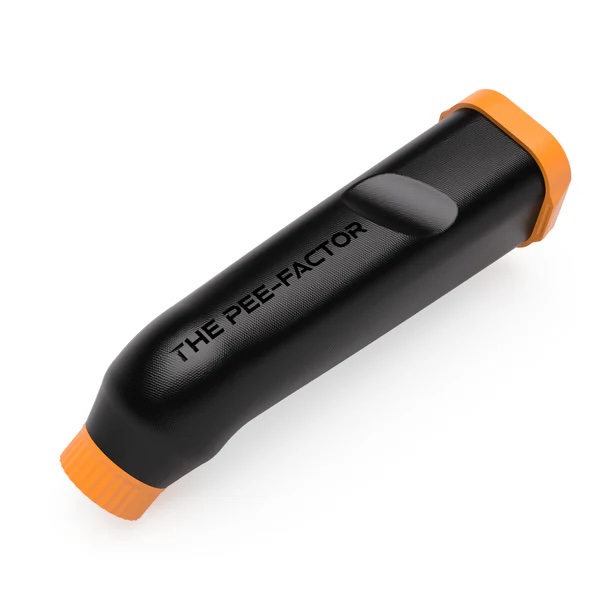
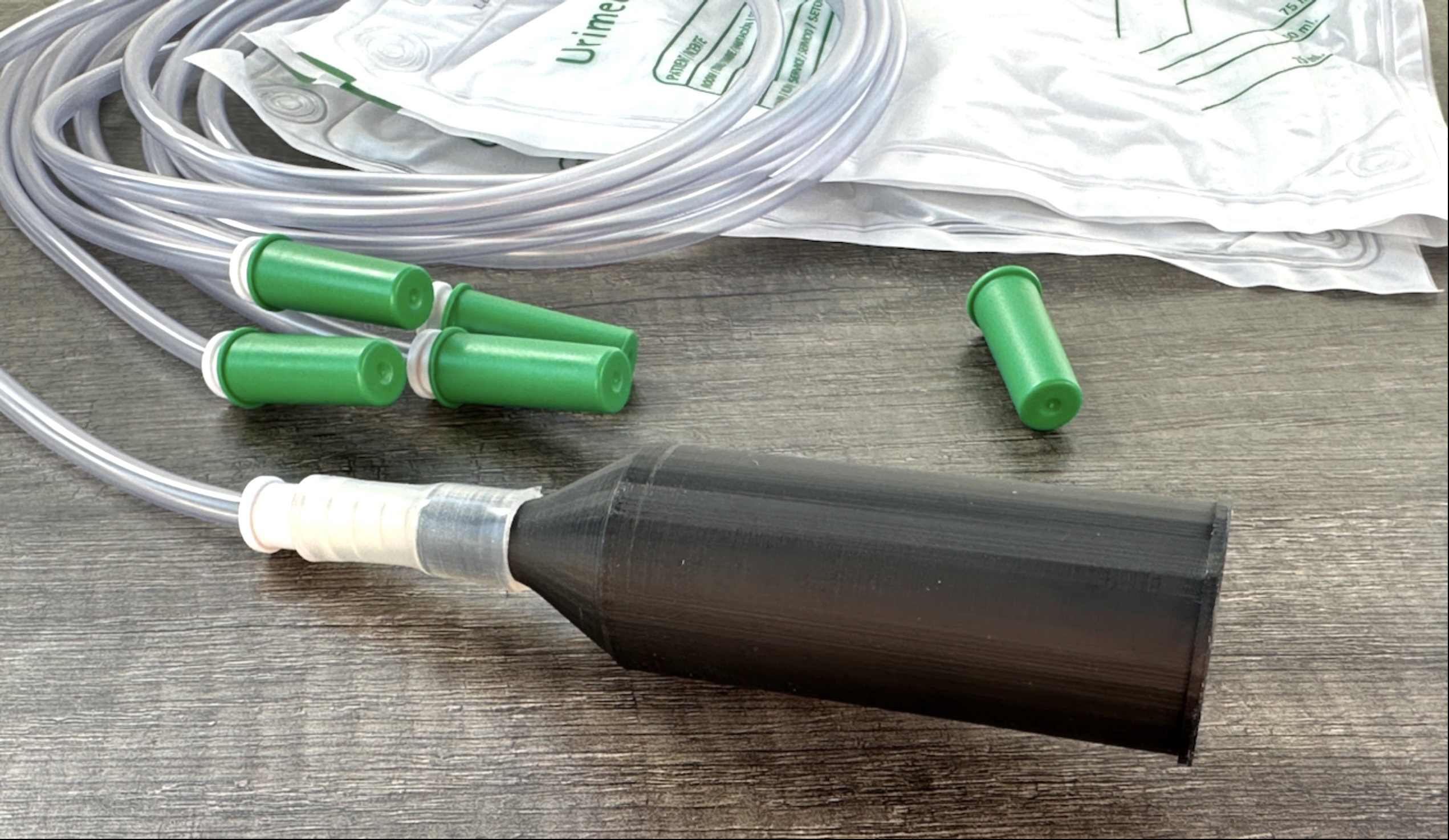
Long before 3D printers could be found in every other home, Marcos Rosenkjer (a paragliding pilot) invented a device to be an alternative to the basic Starfish without the commitment of Condom Catheters. It was made of molded hard plastic, had a slight angle, had a place to tie a string in order to secure it to your harness (just so you didn’t lose it), and was bright orange with a hose attached (it might have been called the Pee2ube, but later rechristened the Sky John). It was effectively a MUD (male urinary device, akin to the FUD). While researching this article I came across “The Pee Factor™” and the “easy peesy for man” (from the same people who make the easy peesy for women) which are also effectively a plastic tube to redirect the urine; you can even attach a tube or bottle if desired.
| Pros | Cons |
| No glue, tape, hair removal, and infinite use in-air! | Requires a position similar to the Starfish method (unless you can use a hose). |
| Infinitely reusable (no disposable parts). | Is reported to be very “fiddly” and requires a significant amount of time with your hands off the controls. |
| Allows you to redirect and minimize potential backsplash. | |
| Might make use with a pod or front mount reserve more feasible. |
Bottom-line: Most of the Pros of the Starfish method, with fewer Cons. Might be all that is needed for pilots who struggle with the basic Starfish, as long as they fly in appropriate conditions.
Pee Pant for Men
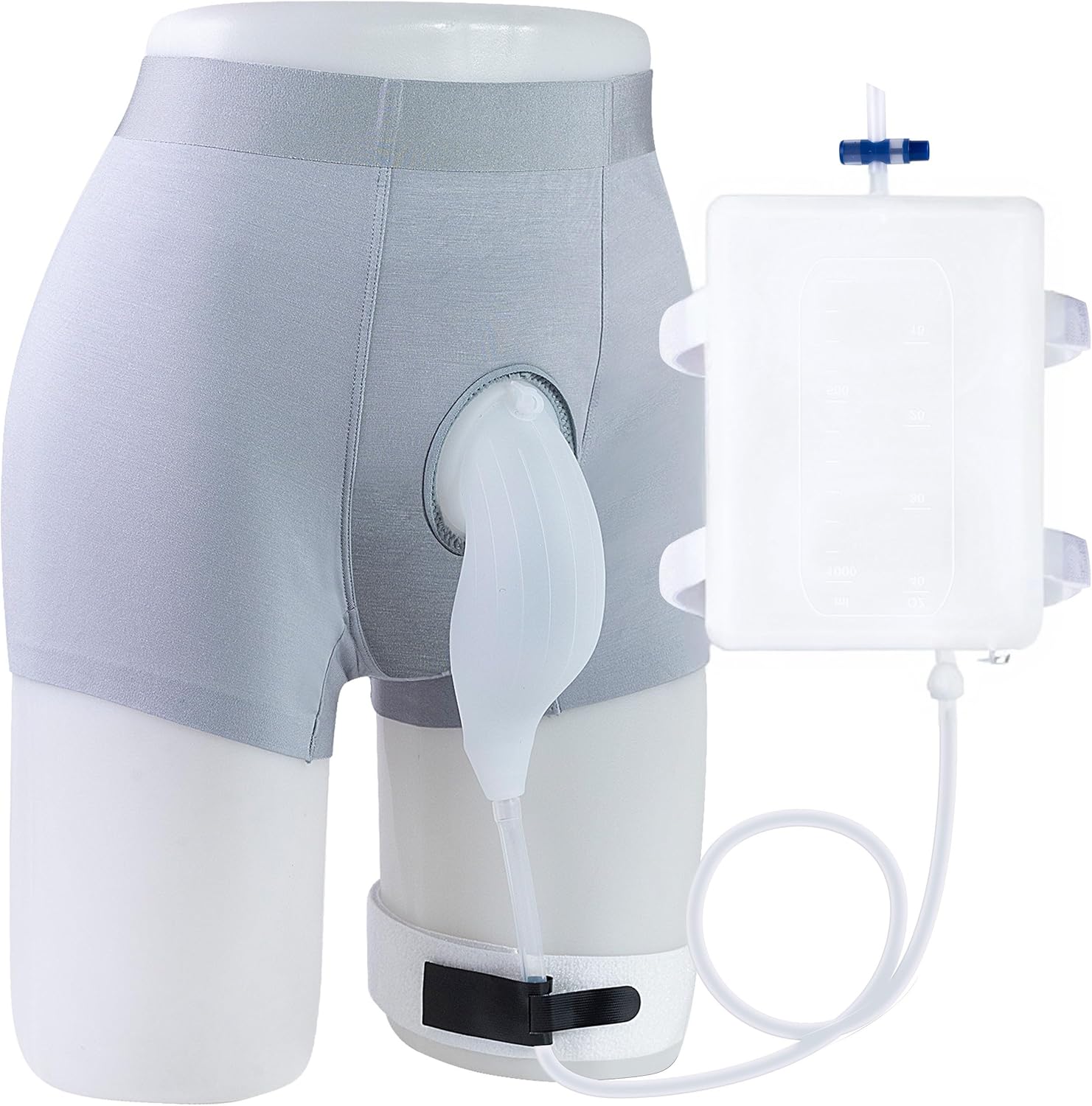
Turns out there is a “pee pant” for men, too! Amazon suggestions turn up some surprising results sometimes :-). I don’t know of anyone who has used this product, but I can imagine it might have some of the same Cons as the women’s version, given how our harness straps fit and the challenges with any collapsible material combined with liquids.
| Pros | Cons |
| Like the Male Urinary Devices, there is no glue, tape, or hair removal required. | It’s unclear how it might actually work while in-flight. (Might have similar drawbacks of the “Pee Pants” for women.) |
| It is reusable. |
Bottom-line: Probably not a viable option, but I’ll leave that as an exercise for the reader.
Condom Catheters
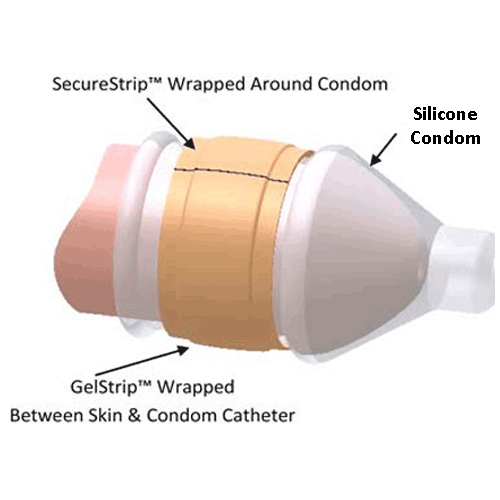
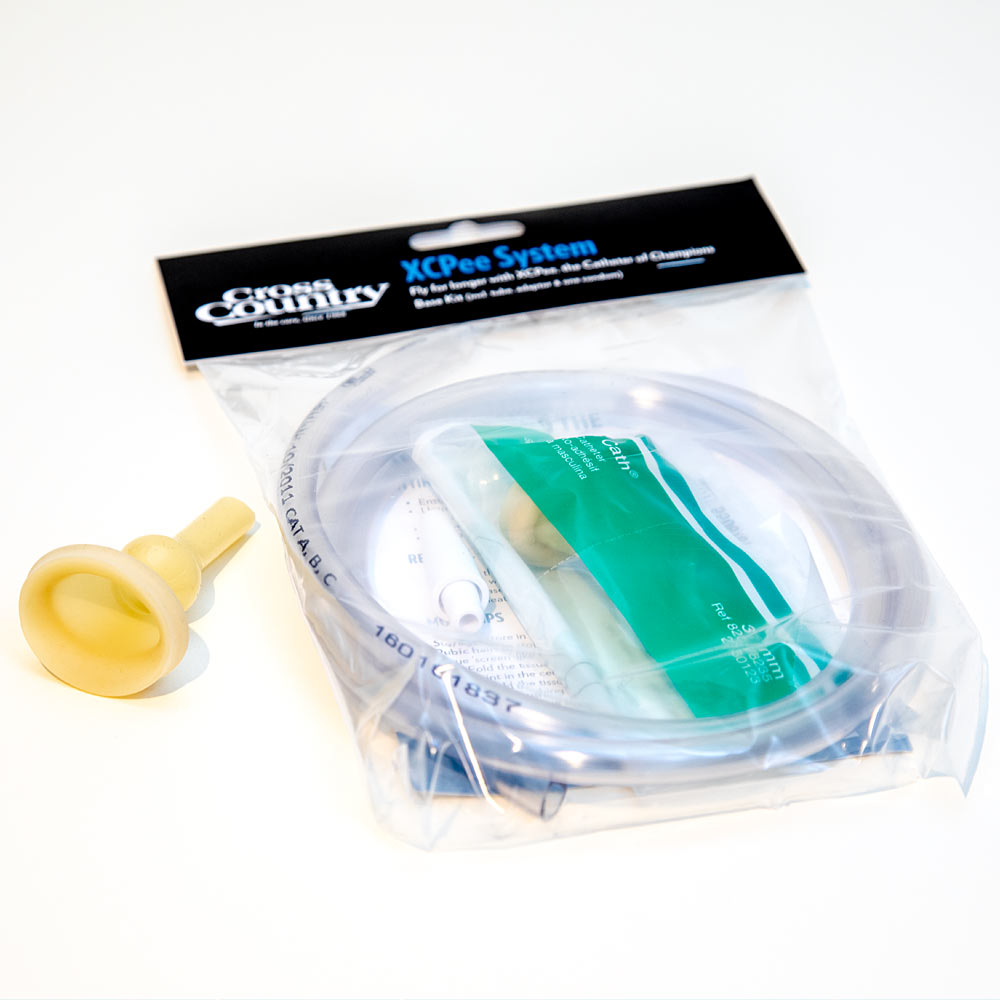
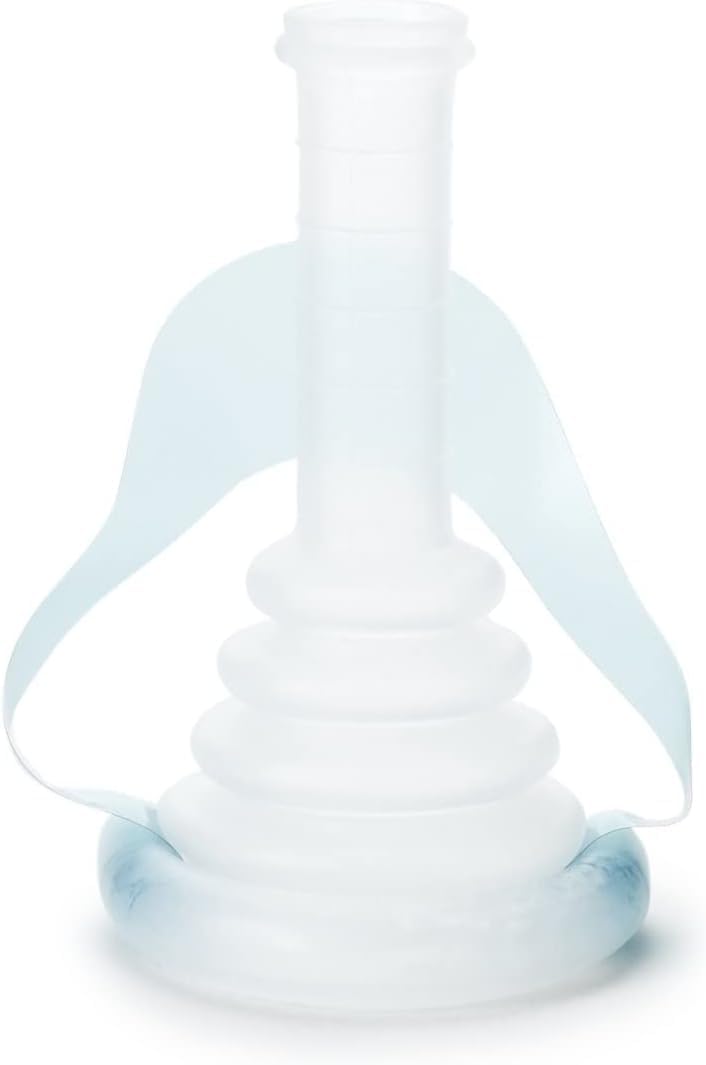
These are easily the most popular option among those who can use them – at least for pilots who fly long distances. The pictures should be pretty self-explanatory, but the basic idea is a special condom with the end designed for connecting a tube. There are apparently multiple styles/brands, so you might want to try different types to find what works best for you. Since these are a consumable medical device you can often order samples (sometimes only for the cost of shipping).
I am definitely not an expert (nor do I have direct experience), but from my understanding and a quick survey of some users here are the pros and cons.
| Pros | Cons |
| Infinite use in-air! | Requires carrying the appropriate equipment and installing it prior to flight. |
| Requires no special positioning or movement of the harness; works with all harness types. | Disposable, so you need to carry the used device until you can throw it in the trash (also, makes more trash). |
| Can be set up so that hands never leave the controls (so relief can be found virtually any time). | Some people require adhesive (glue or tape) to secure the catheter in place, which may cause skin irritation and adds inconvenience. (Check Resources for a product that might help with adhesive removal discomfort.) |
| Readily available (they are a standard medical device) and often even available to purchase at competitions. | Pinching of the tube may result in disconnection or malfunction of the device, rendering it useless (and possibly also creating a mess). |
| Come in different sizes (and styles) for comfort/best fit. | |
| Have an adapter so you can attach a silicon tube and route the pee away from your body a variety of ways (see the Resources for more about tubes and routings). | |
| Disposable (although this is also a Con) means it’s common to have spares on-hand and you don’t have to wash them out after use. |
Bottom-line: This is the most popular method used at competitions and for long-distance flights because it is the easiest to use in-flight and you can pee as many times as you’d like. While there are some Cons they are relatively minor for most men.